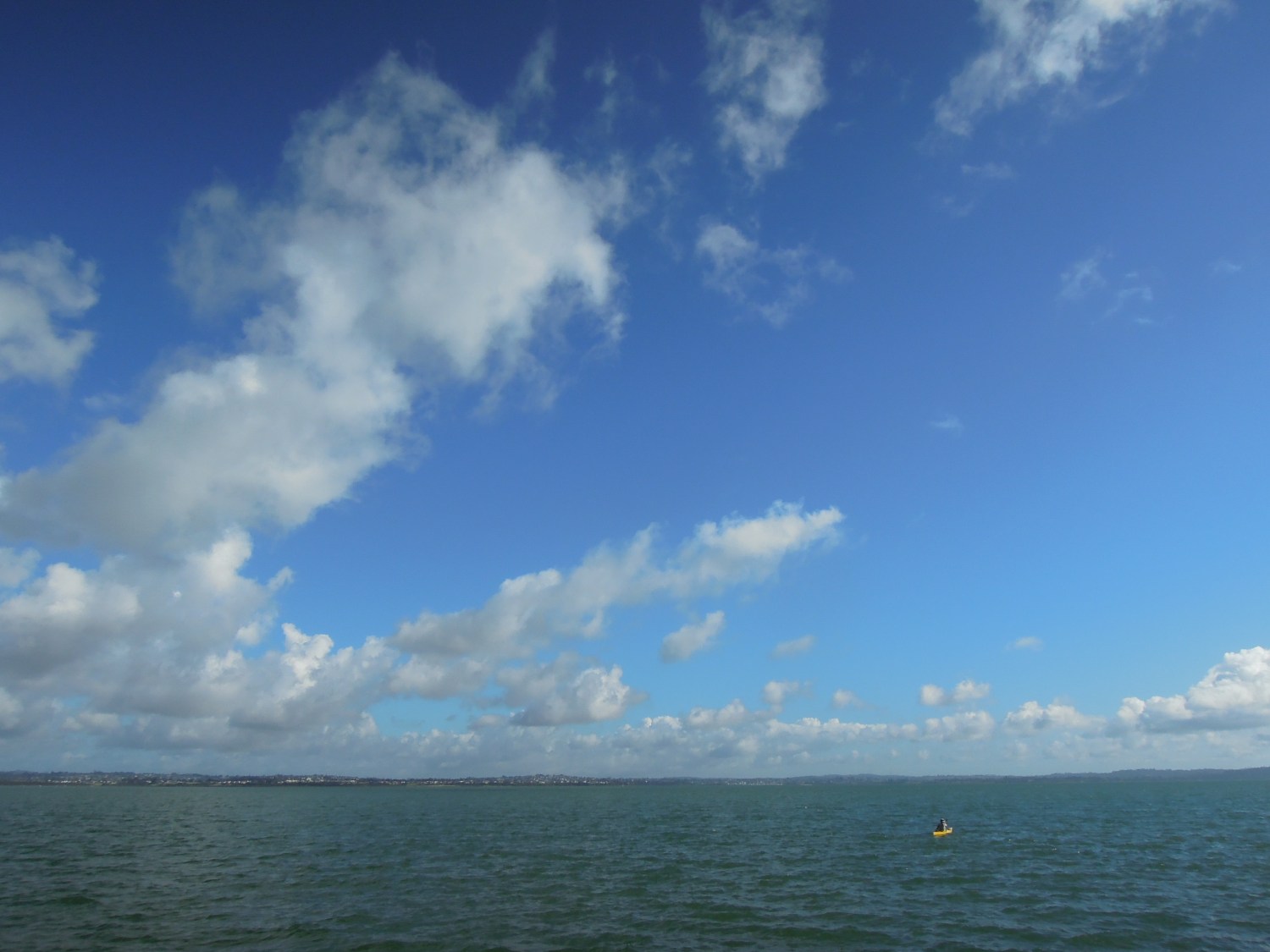

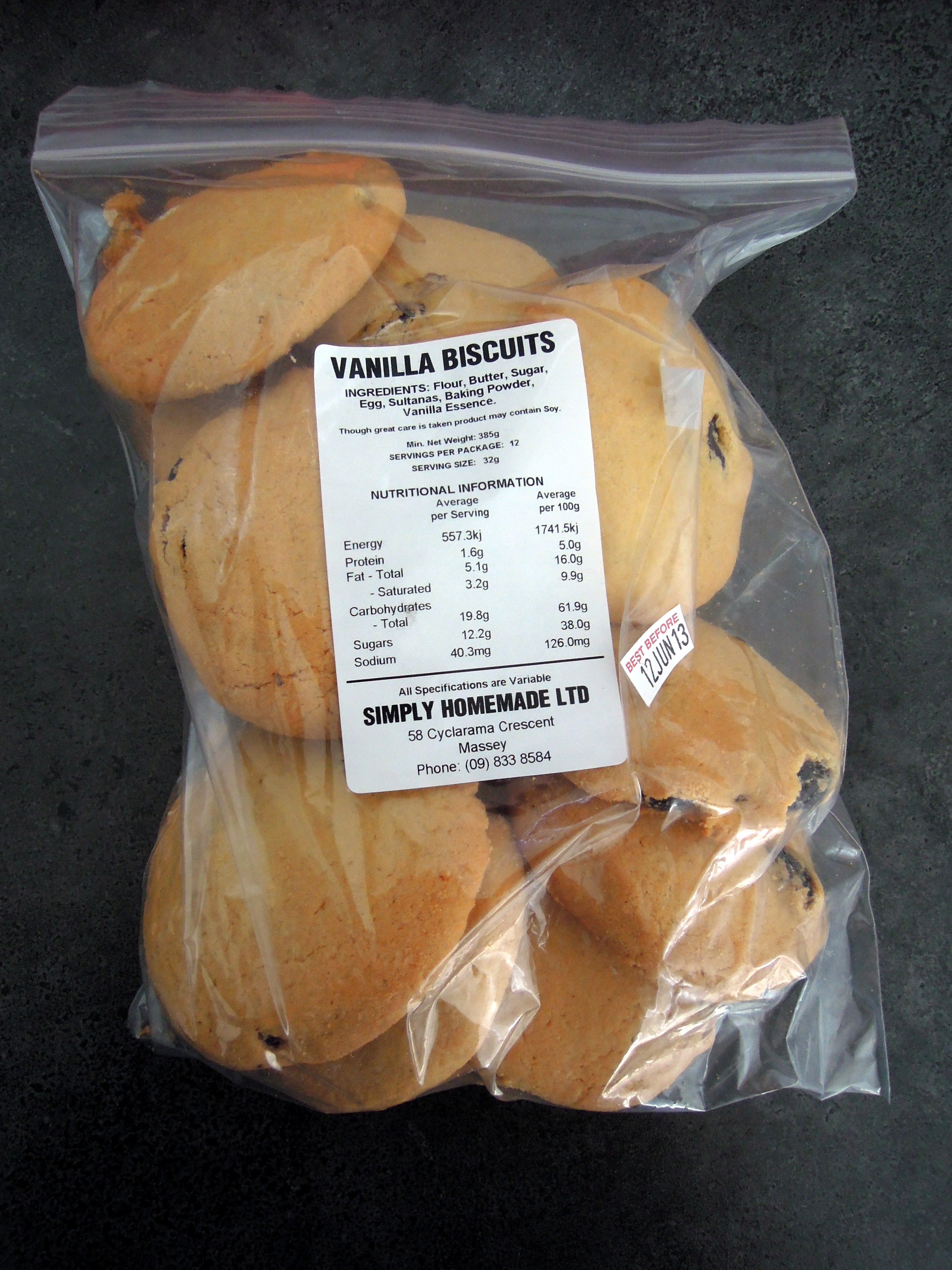
I just had the following exchange in a superette, where I went to buy soy sauce for my breakfast eggs.* I ended up buying these cookies as well, though I’m sorry to report they’re a bit stale (even though the sticker says they’re good till June).
Smiling Asian man behind the counter: Hello.
Me: Good morning.
Man (ringing up my purchases): $12.60. Where are you from?
Me (handing him a $20): California.
Man looks blank, smiles apologetically, shakes his head.
Me: By San Francisco?
Man (nodding, handing back my change): I thought… because you look Asian**…
Me: My parents are from China.
Man: Ah, your parents are from China. So they speak Mandarin?
Me (putting change into my wallet): Mandarin, and Shanghainese.
Man (switching to Mandarin): Do you also speak Mandarin?
Me: A little.
Man: What country are you from? I can’t place your accent. [I guess San Francisco didn’t mean anything to him?]
Me: America.
Man: Ah. Which state?
Me: California.
Man: Oh, California. So you live here, or…?
Me: I’m traveling.
Man: Ah. What part of China do your parents come from?
Me: Shanghai.
Man: Ah, Shanghai… it’s supposed to be beautiful.
Me: I’ve never been there.
Man: Oh! Well… enjoy here.
Me: Thank you!
Man: Thank you!
Me: Bye! [Zai jian, “bye” in Mandarin, is literally, “See you next time!”]
Man (smiling and waving): Bye!
I’d gone out this morning because I had to see the sky. When we arrived yesterday the clouds had me almost speechless — here’s the view from our place, yesterday evening:

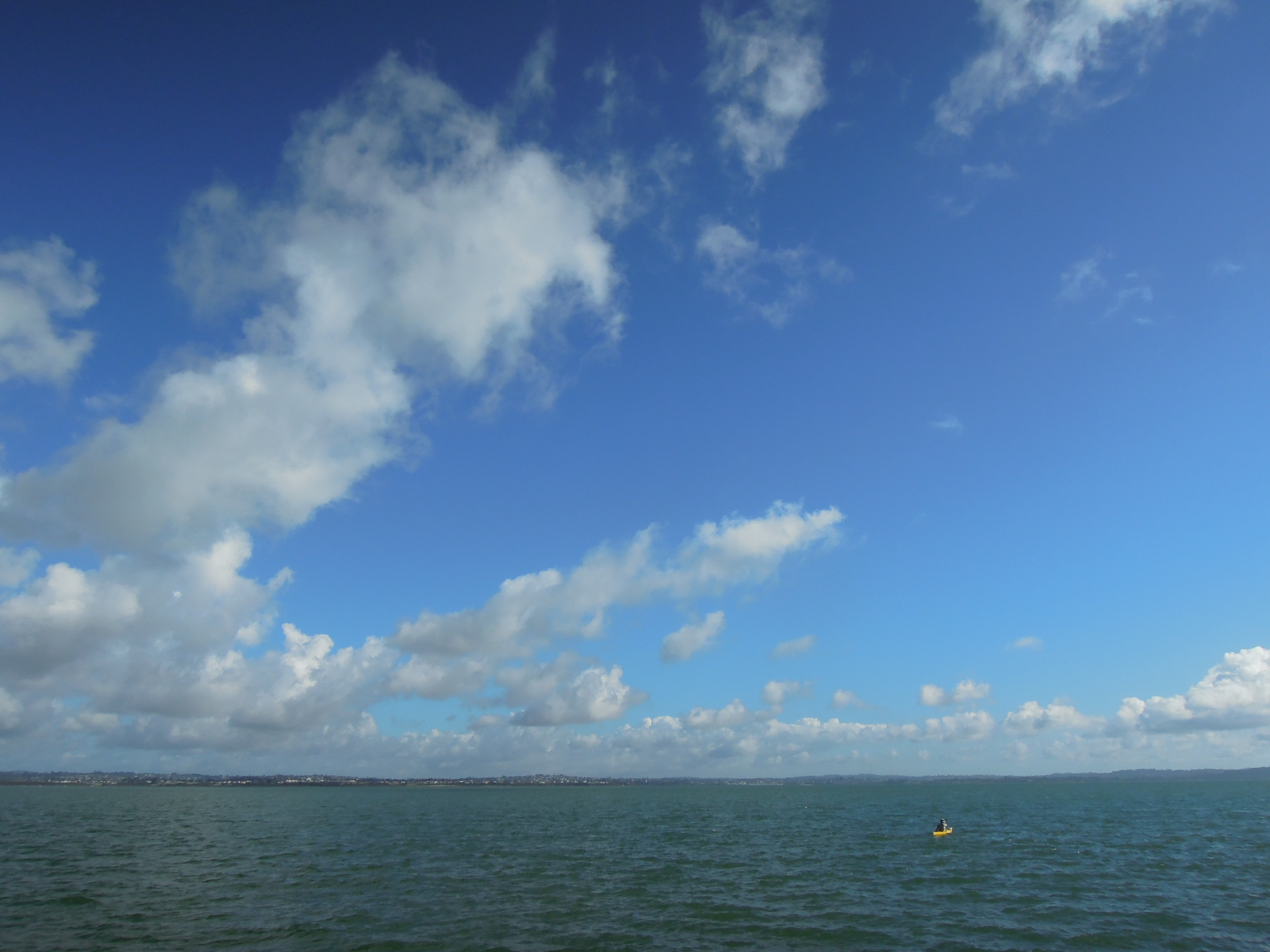
I found out there’s a little reserve a kilometer from where we are (by the way, we’re staying in Point Chevalier, a suburb on the west side of Auckland; it happens to also be a peninsula). The reserve doesn’t seem to have much to it, but it was a pleasant place to sit. This kayaker pushed off while the gulls and I watched.
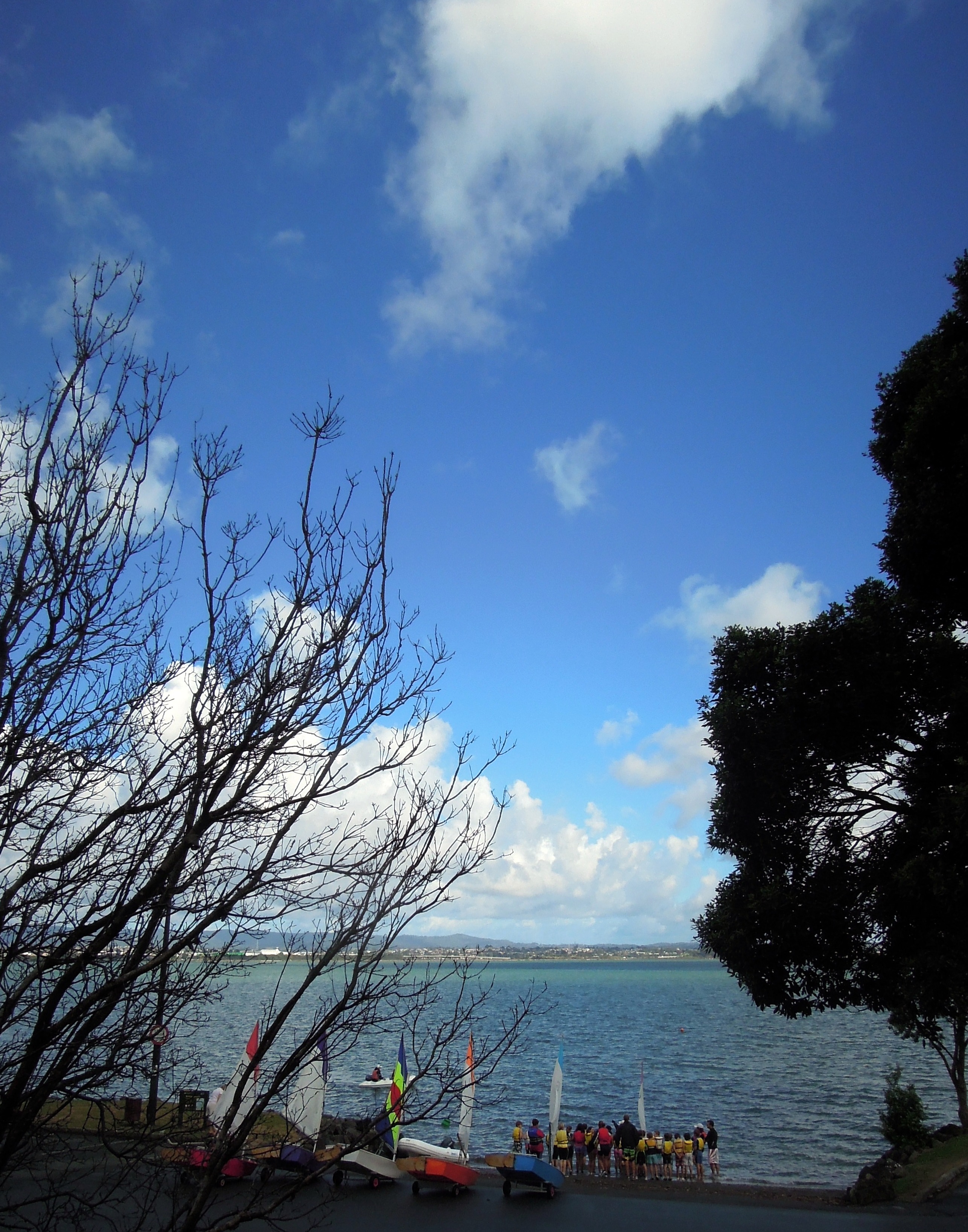
There was a sailing club, with a kids’ class in noisy session. By the time I left the reserve they were about to get into the water. I heard one of the kids yelling, “It’s FREEZING!”
I’d brought my sketchbook but forgot all my markers, so I used a ballpoint I bought at a university shop in Singapore.

It is a bit strange, actually, being back in “the West” after a month and a half in Asia. So far the people we’ve encountered here have been extremely nice — I was almost weirded out by the friendliness of the Customs folks at the airport*** — but things feel different. People seem loud somehow, not that Asians are so quiet (and anyone who thinks so can go stand next to the Japanese tour guide I encountered at Akaka Falls in Hawaii!). In fact, there are so many Asian-owned businesses in our neighborhood that besides this morning’s grocer, there was also yesterday’s baker and the super-friendly owners of the new gelato/snack shop, and two construction guys I heard speaking Mandarin to each other. And our host is third-generation Kiwi-Chinese. After Singapore, the cool, non-humid air is amazing, but the streets feel empty and the shops and homes seem huge. We’ll see how the adjustment continues.
*I’ve always enjoyed soy sauce on boiled eggs, but it wasn’t until I went to Singapore and had kaya toast that I considered pairing soy sauce and eggs with sweet toast. You know how everyone has their own personal culinary dictionary of what’s good to eat versus what’s gross? For the curious: I put soy sauce on boiled or poached eggs after they’re done, unless I’m making lu or tea eggs. I put soy sauce on fried eggs either during cooking or after they’re done; my dad invariably adds it during. However, I would never add soy sauce to scrambled eggs after they’re done, or during cooking — only beforehand, as I’m beating the eggs together, and only if I’m making Chinese-style scrambled eggs, or tamago.
**In our recent travels, when the (Asian) locals ask where I come from, they say it’s because I look Asian. In the US I would say of myself and other Asian Americans that we are Asian, not that we look it, so their language seems odd to me. But in thinking it over, I realize it makes sense. As Asians in the US, our Asianness is unchangeably mapped onto our bodies; the implication is that looking and being are one and the same. But in Asia, when someone finds out I speak American English or live in the US, their discovery is that I am not as I look. By the way, some people say that in-Asia Asians can tell Asian Americans just by looking; my experience has been that that’s not so; I get taken for a local almost everywhere. I guess that means that for Asians as well, looking and being are also assumed to be one and the same — until they meet someone like me.
***They even washed my hiking boots! For bio-conservation reasons, not cleanliness. The boots were muddy from Hawaii. But they did it so cheerfully! In my experience the Immigration officers in the US and London are least friendly, but the ones here actually smiled and laughed. I don’t think I’ve seen that anywhere.
 satsumabug.com | Lisa Hsia
Welcome to NZ and Auckland, hope you enjoy your stay. Point Chev is a nice part of Auckland, I lived there until I was nine or so years old. Apparently the mobile phone coverage is on the average side out that way, but I like how walker friendly it is.
Thanks so much, Peckish! I’m really enjoying the area so far — we haven’t gone into the CBD yet but we’ve explored around Point Chev and surrounding neighborhoods (the lake at Western Springs is fantastic!). You’re right, the walkability is wonderful. That’s partly why we picked this place over a cheaper one in another neighborhood; I love being where I can walk to things!
Ooh, I always wanted to check out New Zealand!
When I went to Taiwan a few years ago, I was with my mom and dad at the Taipei 101 building. We were on one of the floors with some fancy jewelry and a saleslady was talking with my mom about some jewelry. The saleslady mentioned that these would be “great to take back home.” After my mom was done and we were walking outside, my mom made a comment that she thought it was unexpected that the sales lady implied she’s foreign through the words “take back home.” (Given that my mom was born and raised in Taiwan.) My mom then went on to ask me how did the saleslady know that my mom had been living elsewhere? All I could say was something along the lines of, “haha, you know, fashion here and fashion in the states is totally different. For example, look at me, then look at the next guy around my age.”
In my experience, Asians in general tend to easily recognize that I wasn’t raised in Asia. But I’ve found that they have a hard time figuring out if I’m Chinese, Taiwanese, Japanese, Korean, or Vietnamese.
Hee, I think we visited those floors at Taipei 101 too. 🙂 I wonder if they also assumed your mom was a foreigner because she was there — I mean at Taipei 101. My experience in HK, Taiwan, Kyoto, and Singapore was that people very often took Erik and me for locals (well, until one of us opened our mouth!) if we were in local-type places, but if we were in touristy places (like temples or museums), their responses varied a lot more. This surprised me because everyone said that in Asia we would stick out like sore thumbs, but (unless we’re delusional?) we really didn’t find that to be true. In fact, several people in Kyoto responded with amazement when they found out I couldn’t speak the language, and one even said, “Eh?! But you look so Japanese!” (We had one funny exchange in a ramen restaurant when I told the guy, “Nihongo ga dekimasen.” He said, “Ehhhh?” and then something which I’m pretty sure meant, “But… you ARE speaking it…”)
On the other hand, I haven’t been to China, so who knows how people in my actual ancestral homeland would respond to me. 😉
One more note on this, in my reply to Andrea’s comment below. 🙂
I’m embarrassed to admit this,but my impressions of New Zealand come from watching the Hobbit and the Lord of the Rings trilogy. I am anticipating loads of beautiful scenery photos and artwork from you. Something struck me about your post here though. How we make instant impressions/assumptions about a person based on the way they look or sound. Like the man assuming you weren’t from the US. I’m unsettled by that.
I wouldn’t have known anything about NZ either if my sister hadn’t come here on her honeymoon. (I admit I’m a little tempted to visit this place but surely it’s a tourist trap?)
I don’t mind Asians assuming I’m from Asia, because that makes me feel like I passed a test somehow. But I do mind non-Asians thinking I’m not from the US. In Paris there was a waiter who didn’t believe us when we said we were from California. That got my back up.
A great post, adored the dialogue.
The clouds remonded me of the Joni Michel ‘clouds’ song : http://www.youtube.com/watch?v=xVoCpWaC500
(or from the other side of the clouds)
The dialog is adorable 🙂
And the sketch is excellent, it is so good you forgot your markers, the need to use another tool brings the best in us.
I like different sketches on the same page.
You are growing great!
Thanks Dov! I really love that Joni Mitchell song. You’re right, I approached the sketching with a fresh mind because I didn’t have my usual equipment. 🙂 And normally I don’t think I would even try to draw the sea or clouds, thinking they’d be too difficult — but I’m so glad I gave them a shot!
I like your sketch of the clouds! 🙂
Tanky! 😀 Me too. I’m really glad I tried it; I don’t think I’ve ever done anything quite like it before. Clouds are tricky. 🙂 But the NZ clouds are so amazing I had to give them a try!!
This idea of “looking” Asian rather than being Asian is so spot-on. I experienced this when I visited Latin America for the first time last summer. Folks in Nicaragua knew immediately, just by looking at me (probably a combination of how I carried myself and wearing a nose ring) that I was not from there. One woman told me, “Estás tan morena, como Nicaragüense” (You’re so dark, like a Nicaraguan), like I was simply a dark white person. But in Costa Rica, I was often (nay, daily) mistaken as Costa Rican until the moment I opened my mouth and my pocha accent gave me away. I got the sense that because CR is the oldest democracy in Central America and more developed than Nicaragua, especially the tourist industry, women like myself are not rare unicorns. I’m sure you can agree: traveling the word as a person of color is eye-opening.
Hey Andrea, thanks for commenting! I loved what you wrote. I never went to Asia until 2010… funny how that happens, huh? I’m remembering now that even though in face-to-face interactions people often seemed surprised I wasn’t local, Erik and I did get stared at a lot on the street, and we were never able to figure out whether it was because we looked “off,” or we’re just tall in Asia (especially in Japan), or whether everyone stares at everyone and we just had no idea because we can only see things through these eyes!
But yes, totally agreed — it’s amazing to travel as a POC. And it’s so different from the standard stuff we’re told about traveling, because people don’t look at us and assume the same things they’d assume about, say, a blonde wearing an Abercrombie tee!
Living in Europe, I appreciate being Chinese (Singaporean) even more and I almost always feel an immediate sense of familiarity when I go to a Chinese restaurant or shop. I used to detest Chinese classes when I was younger but am now thankful that I paid enough attention to speak it well and read (50% only hehe). Glad that you have discovered the delicious famous kaya toast + soft-boiled eggs combination! Yummy!
Sigh. I really miss kaya toast and soft-boiled eggs! When I get home I’m going to look for some kaya — I’m sure I’ve seen it in Asian supermarkets; I seem to remember reading the ingredients labels and thinking, “What is this stuff?!” Now I have been enlightened! 🙂
I’m the same way; I feel I appreciate my Chineseness/Asianness so much more after traveling. And I’m very grateful for having tried to learn Chinese as well (not that I’m good at it), since it’s come in so surprisingly handy all over the world — both speaking and reading! Eighteen years in Chinese school and I barely learned anything, but those years were a good foundation for my two years of “Mandarin for heritage speakers” in college; I think it’s that education I’m drawing on now. ;b
I’d try those ready-made kaya spread in supermarkets with caution as I think it’d contain a lot more sugar and not much of the pandan/coconut taste in what you’d get from some places in Singapore where they still make their own (which can be quite rare). Often I find that the ready-made sauces/ mixes – e.g satay sauce, laksa/ curry mix – in a supermarket are loaded with a lot more salt and sugar than what you’d get at a restaurant/coffee shop. I’ve never made kaya jam, so no idea how easy/difficult it may be!
18 years in Chinese school? Did you grow up in Asia?
Oh, very good to know! I wonder how complicated it is to make my own? I did a quick search and there are recipes online… though I can’t remember whether it’s possible to get pandan leaves at home. Frozen maybe. At any rate I doubt I’d know whether my homemade attempt is any good, because I only ever had kaya on toast, never by itself, so I don’t really have an idea of the proper flavor!
I was born and grew up in California, but the local Mandarin-speaking community ran a Chinese school on Saturday mornings, with classes for young children all the way up to 18-year-olds. I should have said I had 13 years of Chinese school! I went there until I was 18 but obviously didn’t start at age 0. 😉
Fwah, it’s a lot of work indeed! I didn’t know that so many eggs go into one small bottle of kaya! Since you live in California, I’m almost certain that you can find fresh pandan leaves – just a matter of how much it’d cost you. But if you can find a pre-made version that you like, then you’d have lucked out 🙂
I see. 13 years of weekend classes still helps laying the foundation, which I imagine would have been reinforced by your family since you probably grew up listening to Mandarin being spoken around you. I just wish that I paid a lot more attention in Mandarin classes (instead of sleeping) so that I could read and write better. But I couldn’t stand copying the same characters over and over again and having to memorise passages / poems for spelling tests :p
Hehe yeah, I passed a lot of my vocabulary tests by drilling my short-term memory. ;b
Actually I didn’t grow up hearing Mandarin around me, at least not at home. My parents speak Shanghainese to each other and my grandpa spoke Cantonese with his kids, so my early home life consisted of those two dialects and a lot of English. The Chinese communities my family moves in are mostly Mandarin-speaking, so I do hear it a lot, but it still doesn’t feel quite like my family language!
Ah, I understand what you mean! It was only in recent years that I realised that my so-called mother tongue (i.e. Mandarin) is not the same as that for my mum nor my dad. My mum’s mother tongue is Hokkien and my dad’s Cantonese. Also, my English is actually much better than my Mandarin!
Oh cool! I love meeting speakers of (or descendants of speakers of) other Chinese dialects! Erik doesn’t speak Mandarin at all, but he speaks Taiwanese — which is pretty wacky, especially for someone our age.
My English is a billion times better than my Mandarin. ;b And actually, when it comes to speaking, my Spanish is sometimes better than my Mandarin. Sad but true. ;b
Ah, by “Taiwanese” do you mean the Minnan dialect, which is also known as Hokkien? I don’t speak it too well, safe for a few curse words hehe, but I understand it.
Well, at least you understand enough Mandarin to communicate with people 🙂 My French is probably better than my Cantonese. haha
Yep, Minnan, I think. 🙂
I unexpectedly used some Mandarin today in this small town in New Zealand — we were coming out of a photo studio and some Chinese tourists outside wanted to know how it was. I was able to tell them how much it cost, and answer a yes/no question. 😉
🙂 always nice to be of help to tourists in a foreign land!