
We’ve been in Singapore for two days now. It is so different from Kyoto that our month there is already beginning to feel like a dream. Even more than usual, I’m so thankful I documented so much of it. The city was truly — as Aga commented on one of my recent posts — one of my “soul places.” In the time since we left it, I’ve realized just what that means. I have enjoyed every place we’ve visited, but some of them are dearer to me than others. In Kyoto I felt that the city unlocked something — a quality, an aesthetic, a way of being — that has always existed in me, but inchoate or dormant: an unseen potential. The city said, “I see you. Come out” — and it did. It was the same in Paris and in Reykjavík. Memories and specifics fade, but the unlocking cannot be reversed; from each of these places I carry away some new knowledge of myself and my own possibilities.
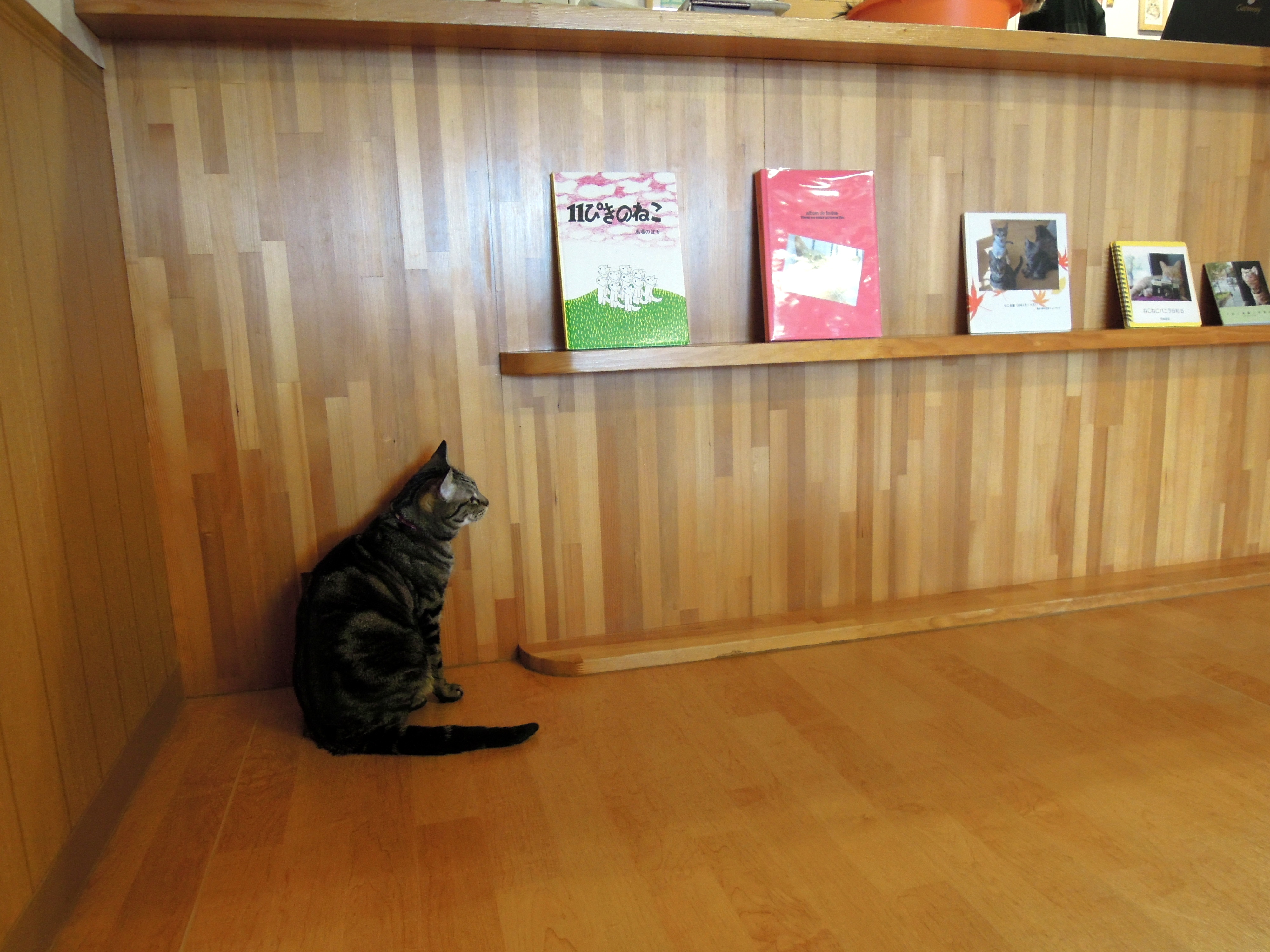
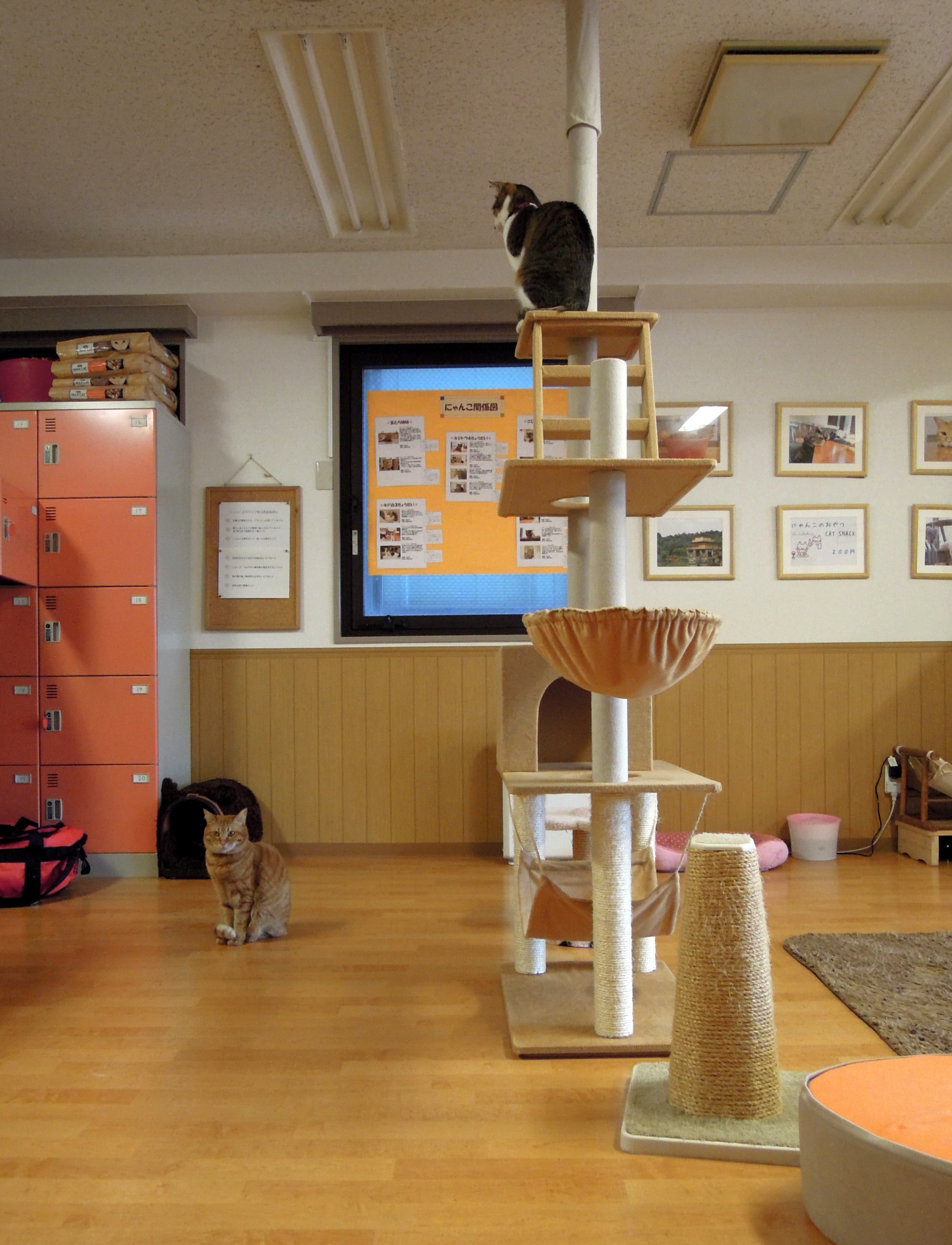
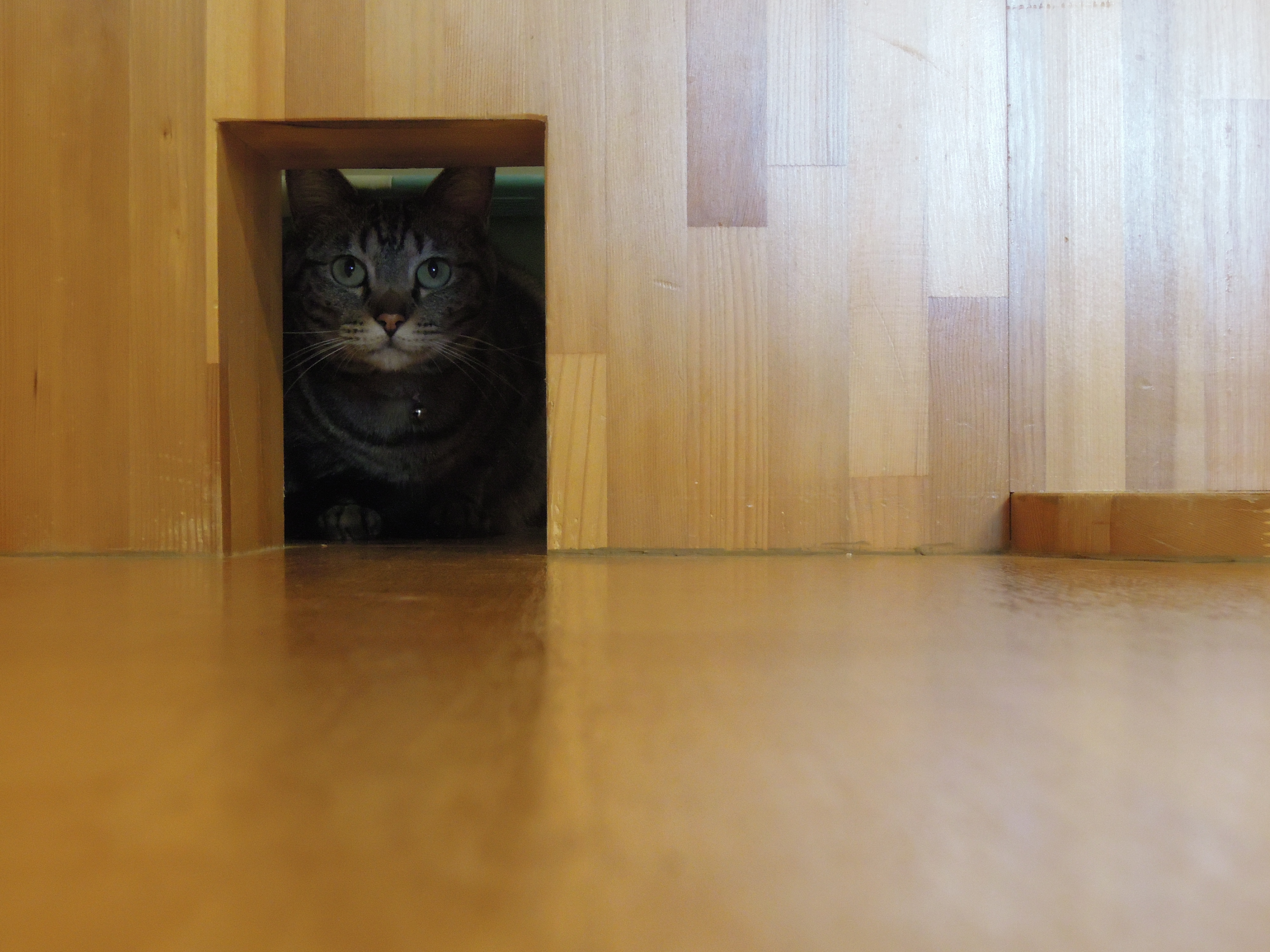
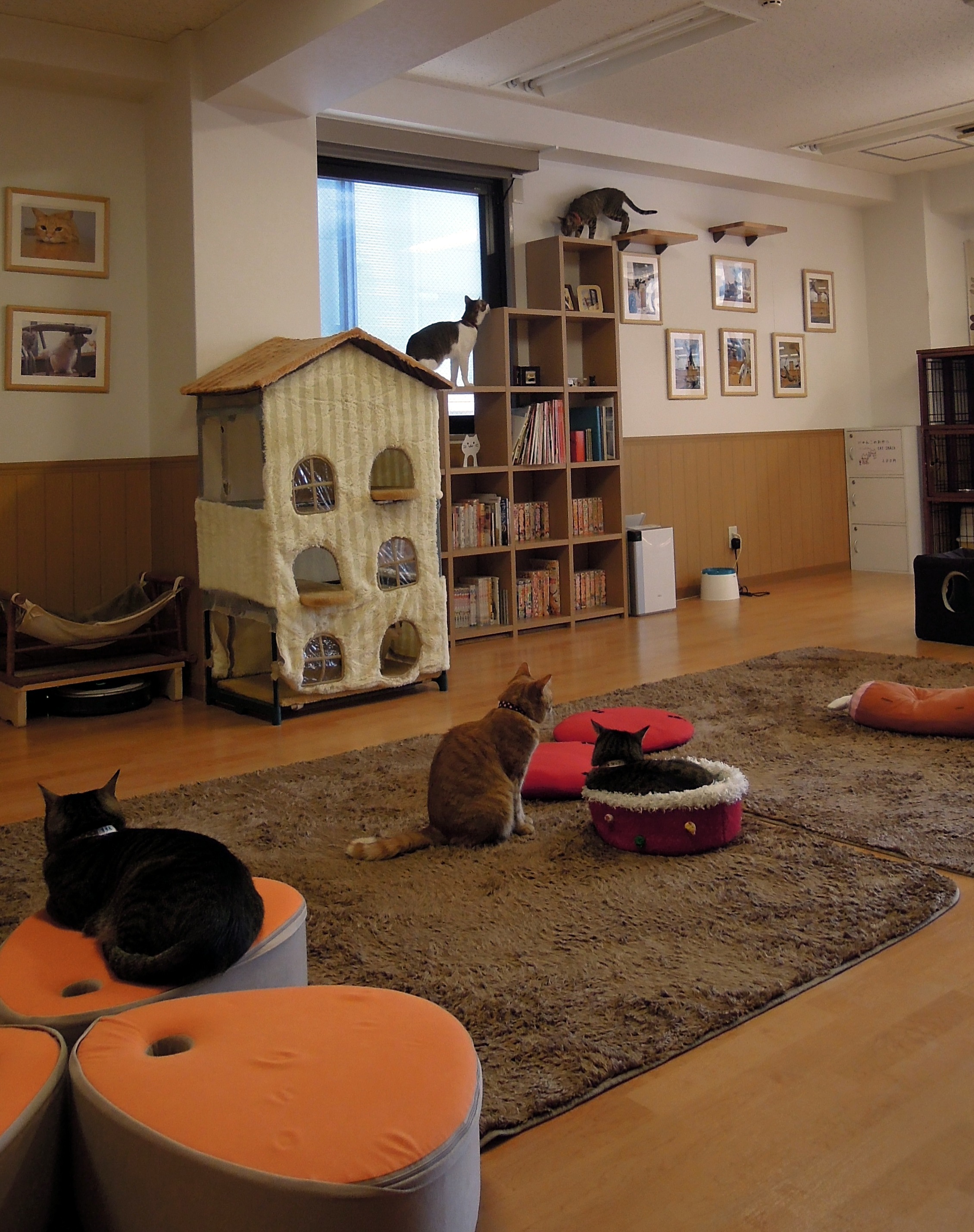
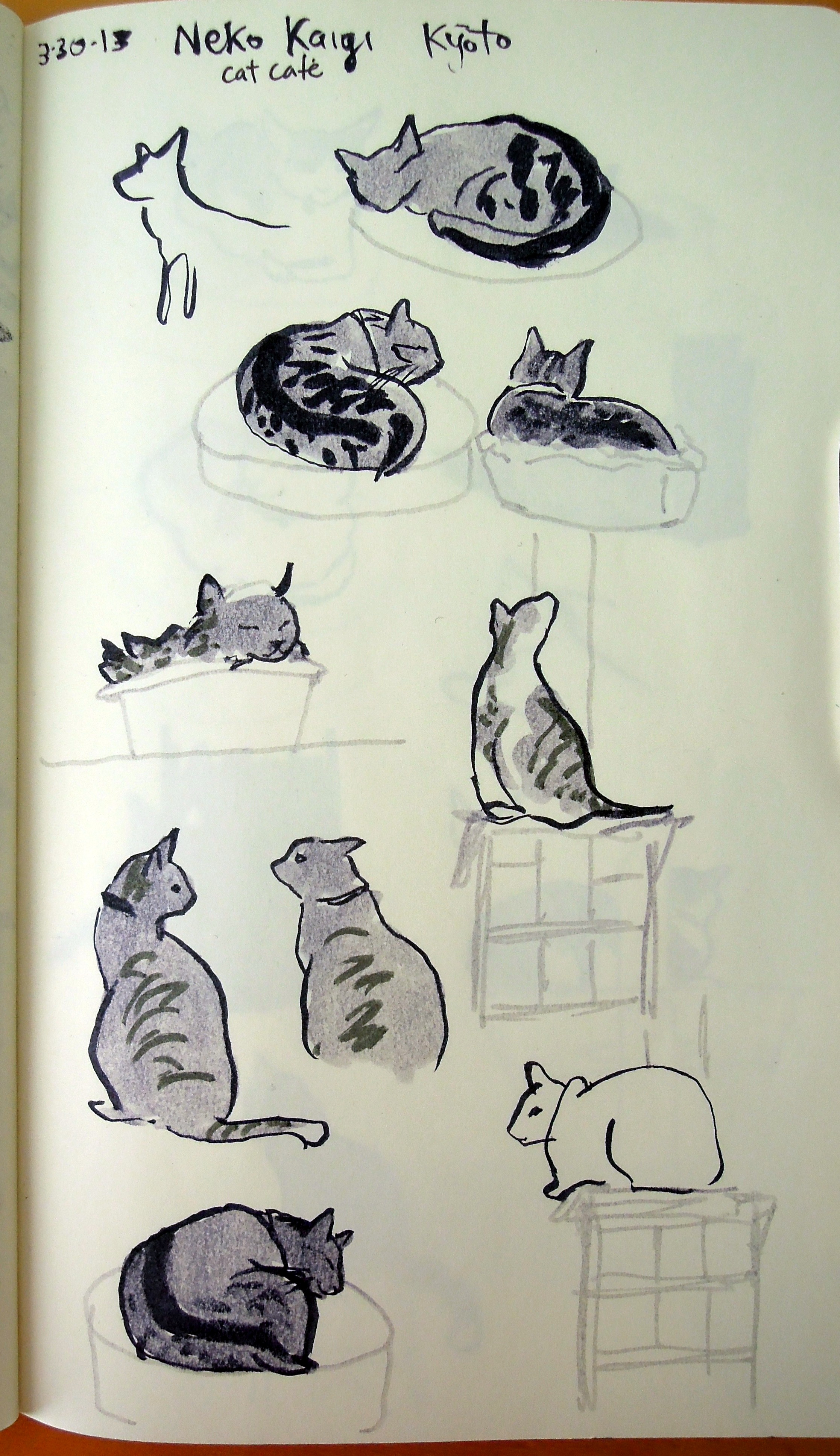
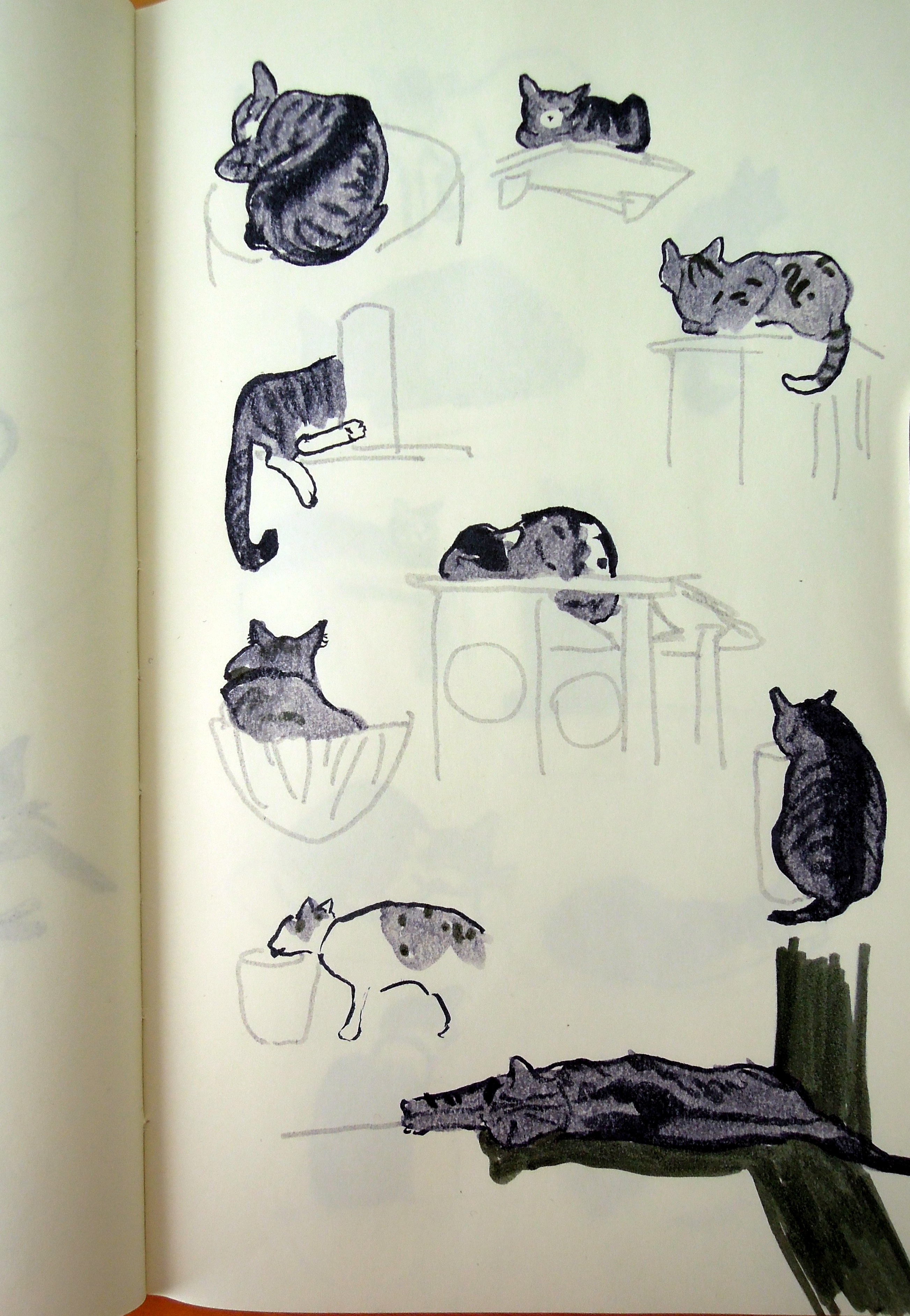
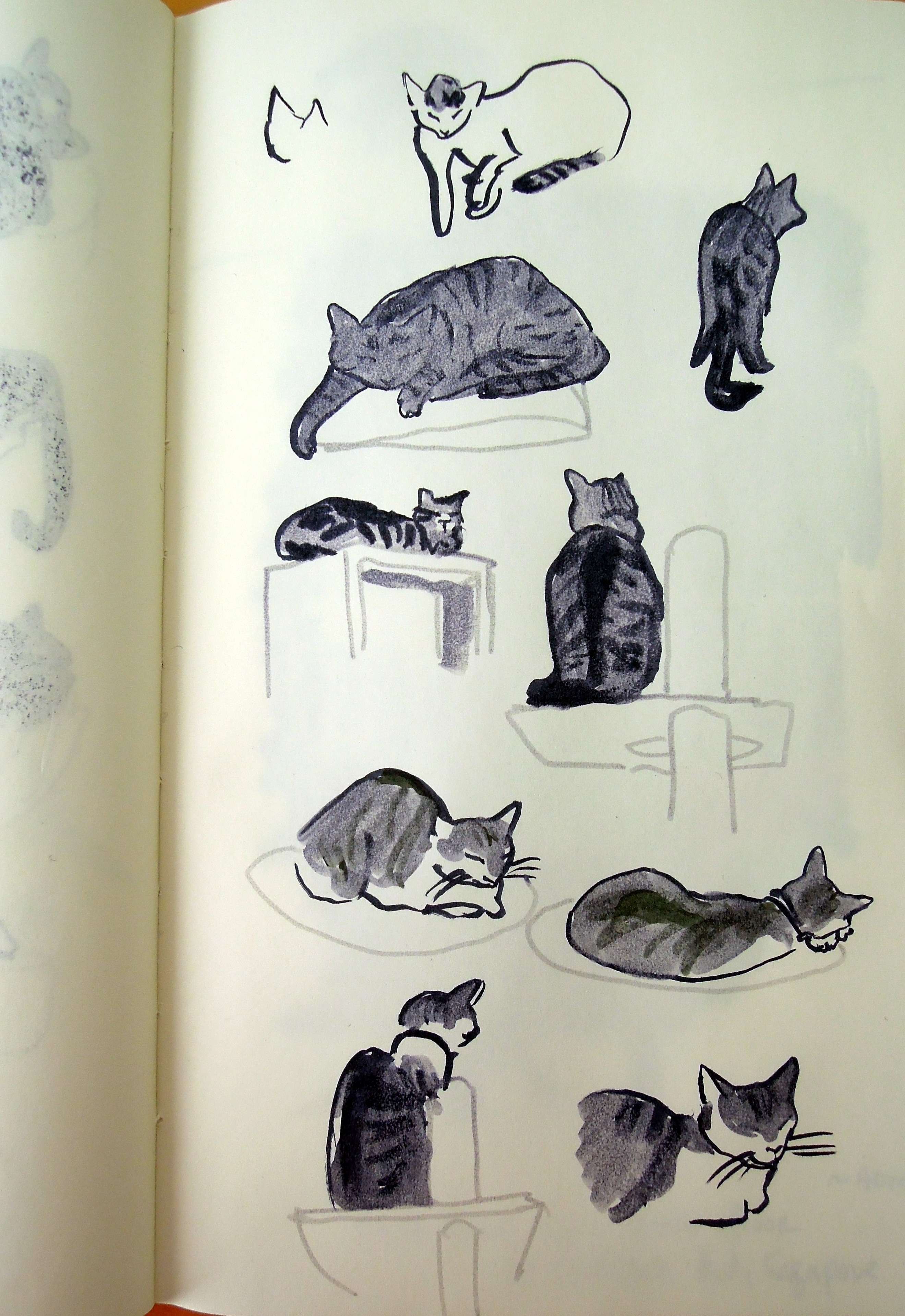
On my last day in Kyoto I ran through a full list of last-minute activities, including a lot of shopping, a trip to the Central Post Office, and a visit to a cat café. These originated in Tokyo, I believe, but Kyoto now has several such establishments. Basically they serve as venues for interacting with cats, for city dwellers who don’t have the space or the lifestyle to keep pets. This one was called Neko Kaigi and it was tucked almost invisibly into the second floor of a commercial building near the city center. It was ¥800 an hour (about $8.50 US) and you could order non-alcoholic drinks, though that was not required. I found the kitties a bit aloof, so I mostly sketched them instead of petting them. This was so fun, I ended up staying for an hour and a half.




The next morning, before leaving, I walked through the house taking photos. It was the house, as much as the city itself, that did the unlocking I described above — if we hadn’t stayed there, it would have been an entirely different experience. As I understand it, it’s an unusual house even by Japanese standards. Due to the language barrier, I don’t know as much about the house as I would like, but when I told one of our hosts how much I loved the ceilings, he said, “I think the person who built this house was very playful. Professionals don’t do this.”
At the entrance: a welcome “mat” made of stones.

Once inside, remove shoes and enter by stepping on a big rock.

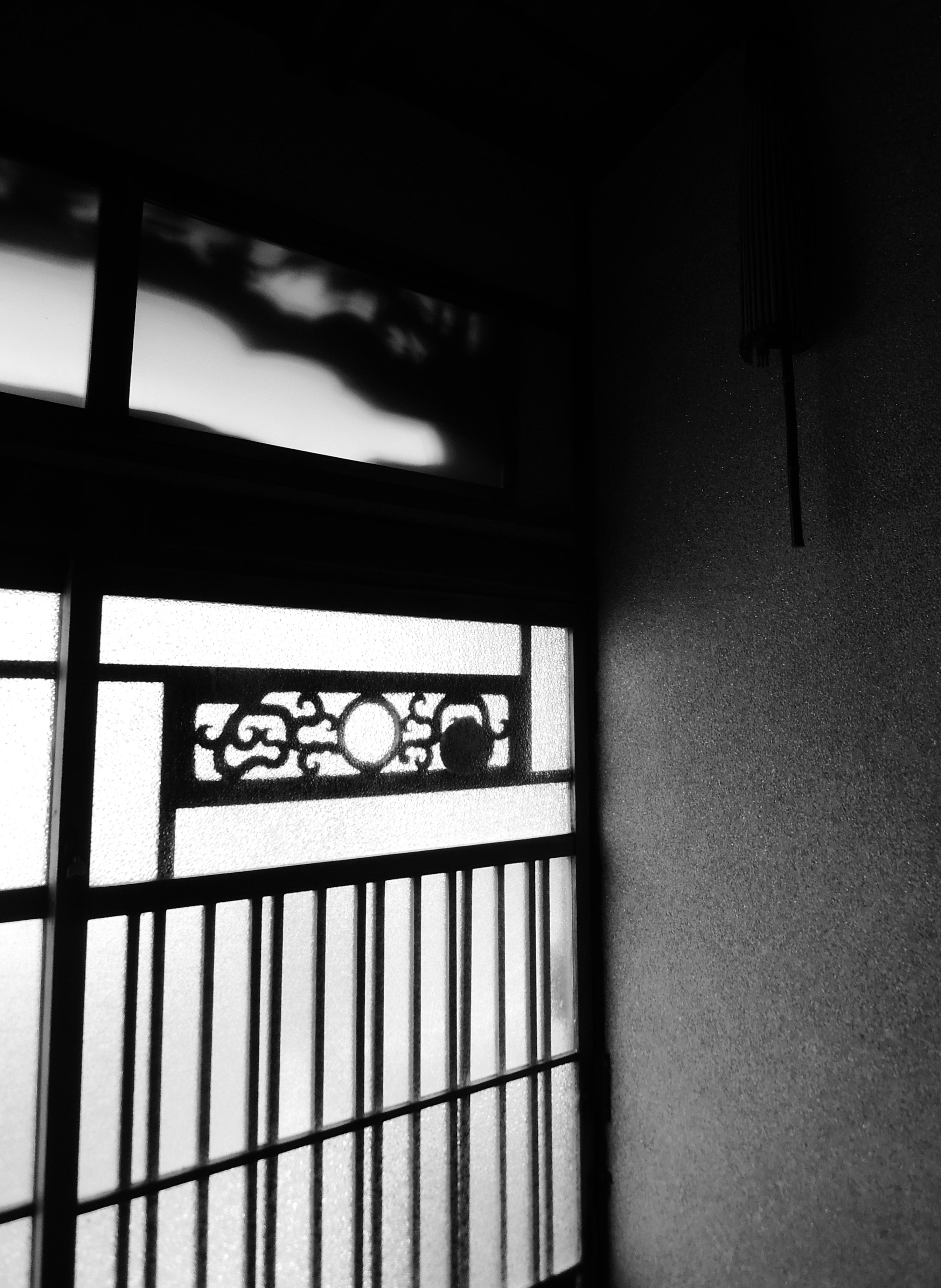
To the left is a room with storage cupboards and a big desk. I used it as an office; it had the only chair in the house.


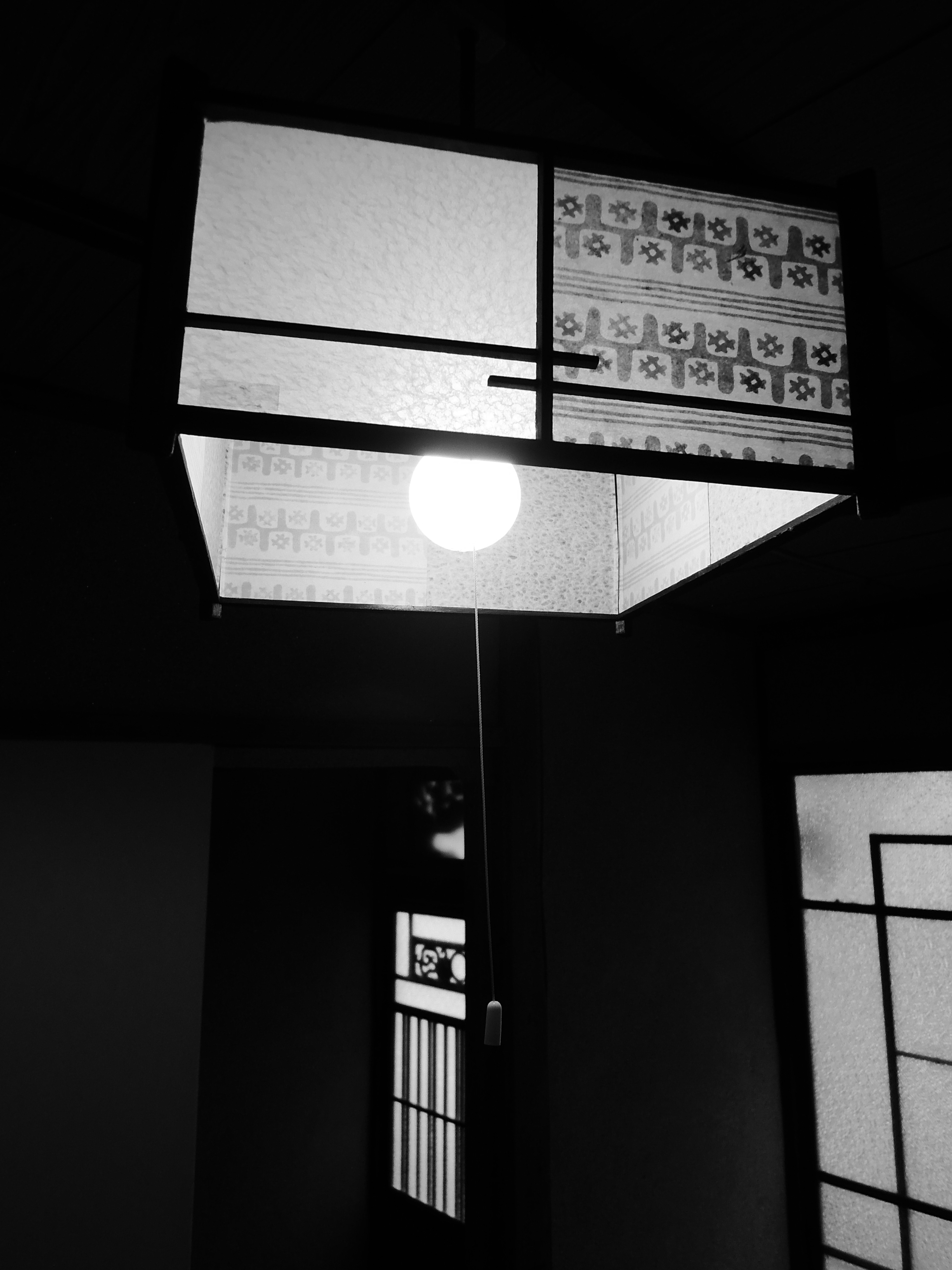
If you don’t go into the office, but stay in the entryway, you find yourself in a little room; the floor is two mats big.
Like most of the rest of the house, the walls are covered in some kind of sand with sparkling flecks.
It’s soft to the touch, like Japanese paper, and if you scrape it, sparkles fall off. I found them sometimes on the floor.

Embedded or hung on the walls are objects: an old parasol, a bit of a tree, dishes.

One of our hosts said the dishes represent the Silk Road, as they come from Iran, Turkey (I think), China, and Japan.

They think this entry room was a tea ceremony room, since such rooms are often small, and laid out so that the doors led to different rooms. In ours, the door opened to the kitchen on the right, and the living room on the left.
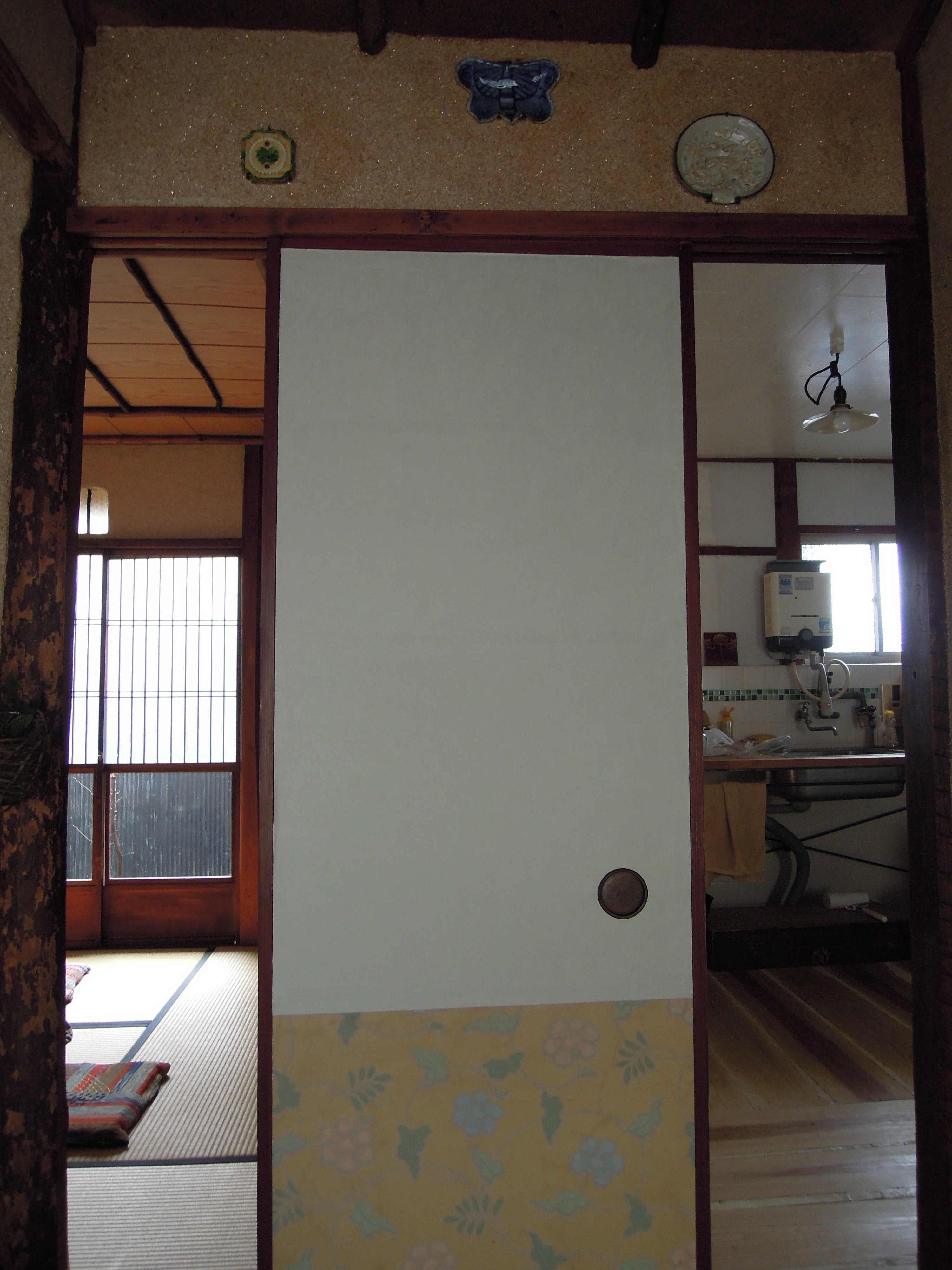
Typically, Japanese families spend the winters huddled around the kotatsu, a table with a heater underneath and a blanket around its sides. Though in March the weather was already warming, we too considered the kotatsu the heart of the house.

Anyway it was no sacrifice to spend time in the living room, with its many lovely details, and the low windows looking onto the courtyard (the same one where I did the big painting).


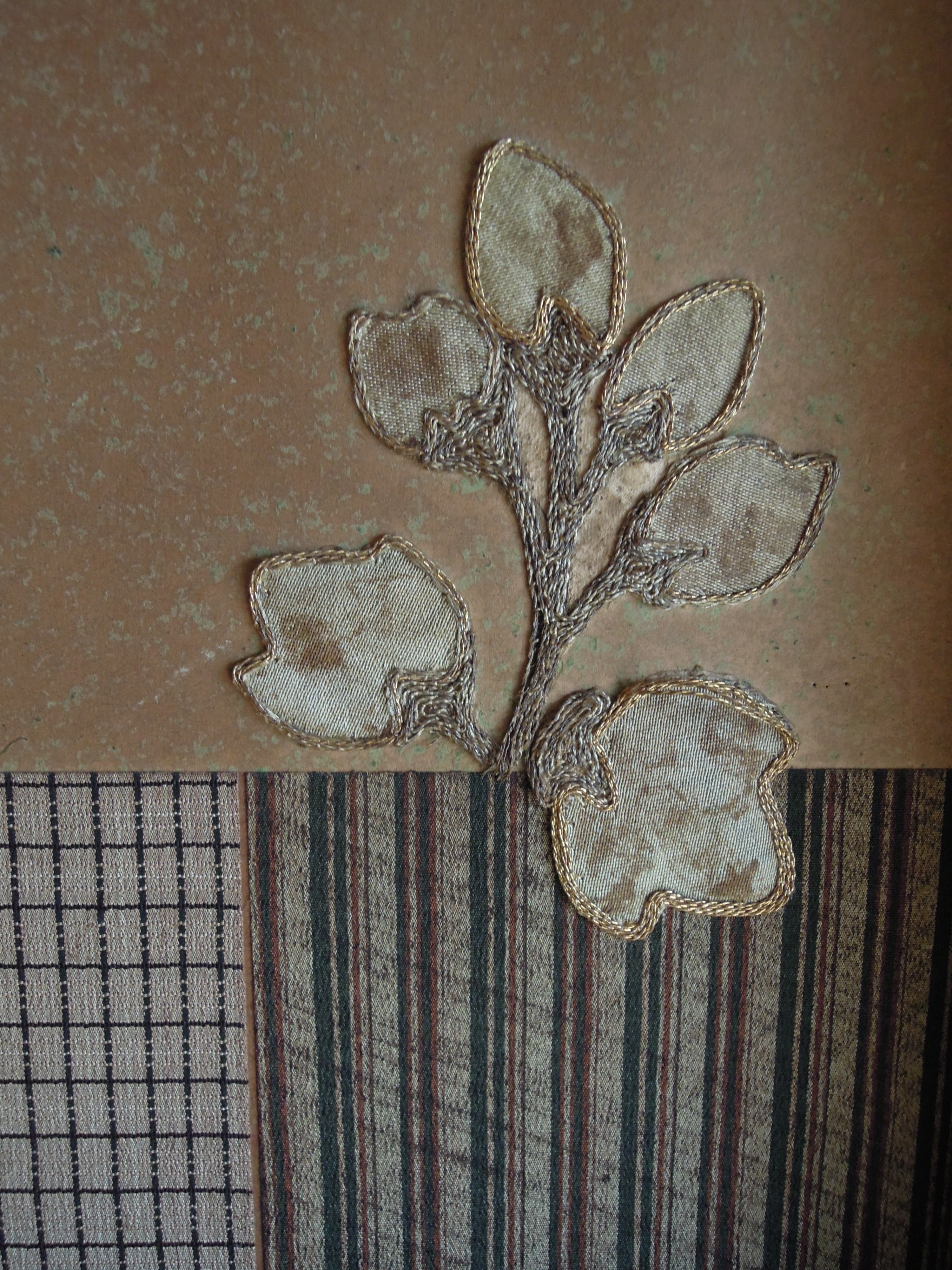

Sometimes, when I got tired in the evenings, I’d lie down with my legs under the kotatsu. I liked looking at the ceiling when I did this.

Unlike the other rooms in the house, which were fully enclosed by sliding doors, the living room was open on one side, to the kitchen.
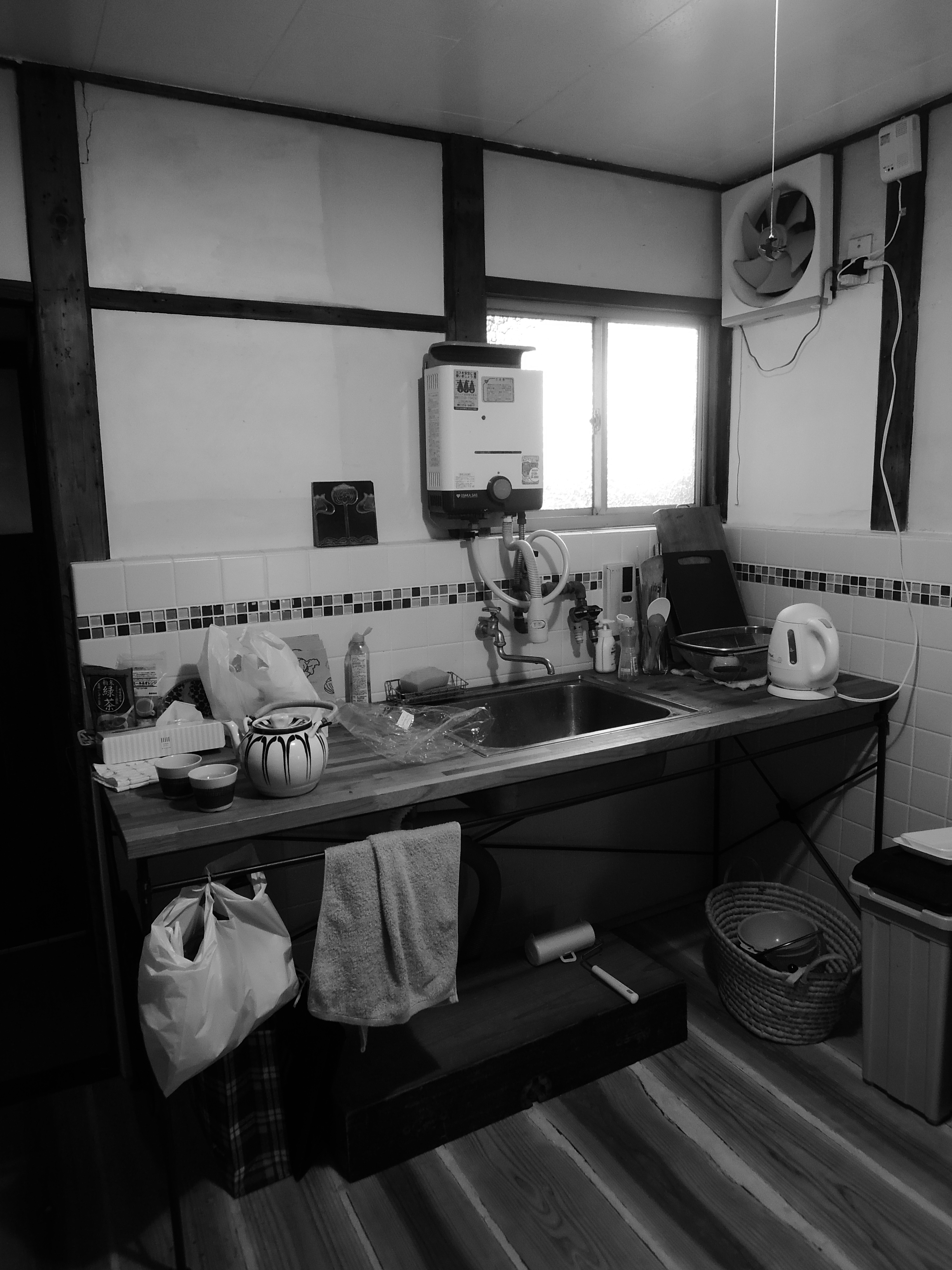
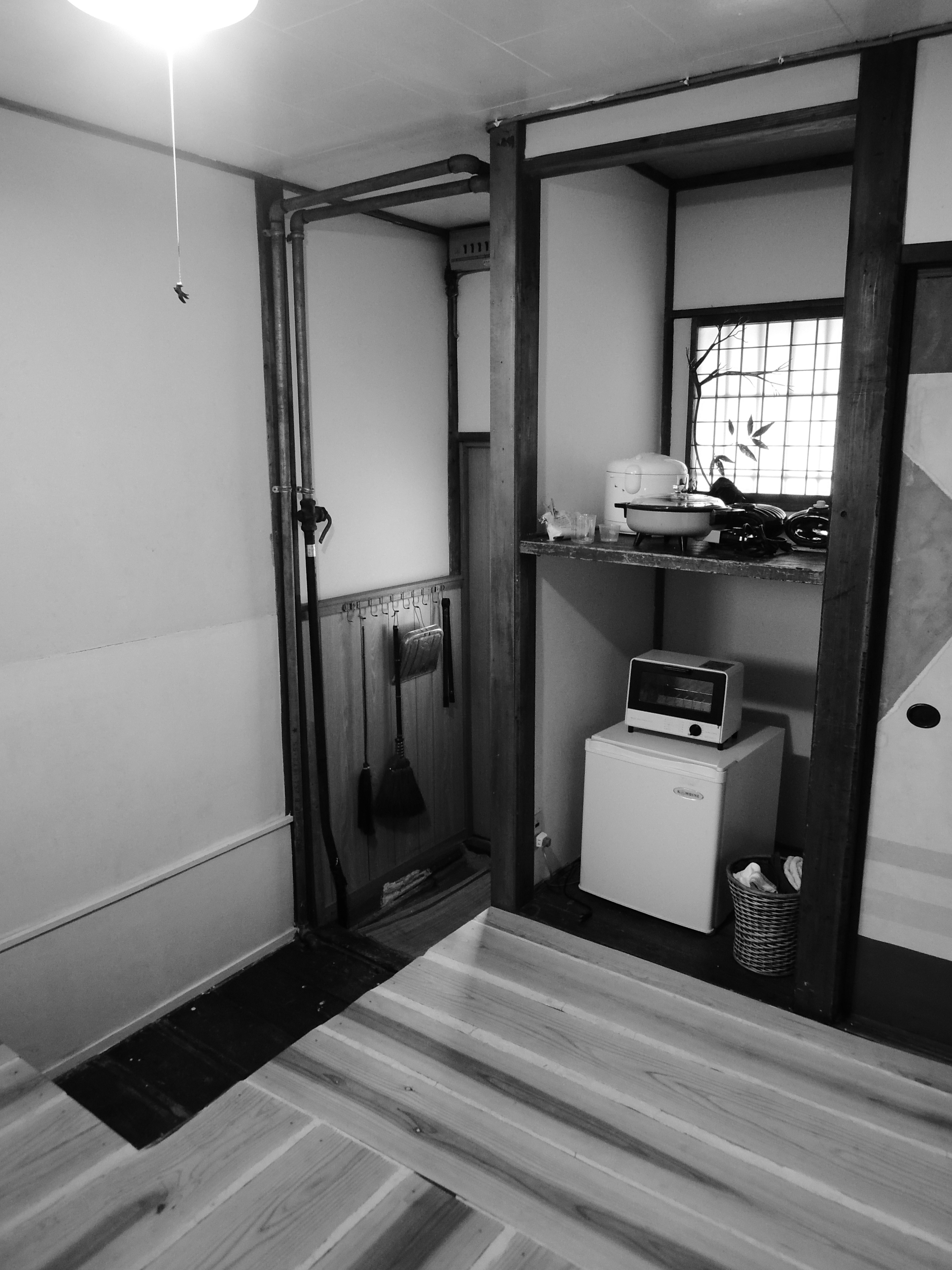
The kitchen had only one freestanding counter and sink, a tiny fridge, and a simple shelf for rice cooker, teapot, and electric skillet.
But the shelf had an ironwork flower and vine on it, and one of our hosts told us he and his friends had put in the floor themselves.
Midway through our stay, one of our new friends lent us a toaster.
Dishes were stored in a little cupboard in the living room.

In a corner of the kitchen there was a concealed trapdoor of removable planks.
A ladder led down to the basement, which sometimes serves as an art gallery.

Off the kitchen is a little room with a sink, the toilet room, another little room with tiled wall, and then the bath/shower room.

In Japanese usage, you shower first, and then enter the tub, for soaking.
I grew very fond of my hot baths, whether I took them in this room, or walked the few minutes to the sento.

Going back out through the living room or entry to the office, there’s a steep wooden stair leading up to the bedroom.
The first time I climbed it, I was a little scared.
Over time we got used to it, but I was always still a bit nervous coming down.
In other older buildings I visited, stairs were even steeper; some were basically ladders.


The upstairs was just one big room, but every time I entered it, I was struck afresh by its beauty.
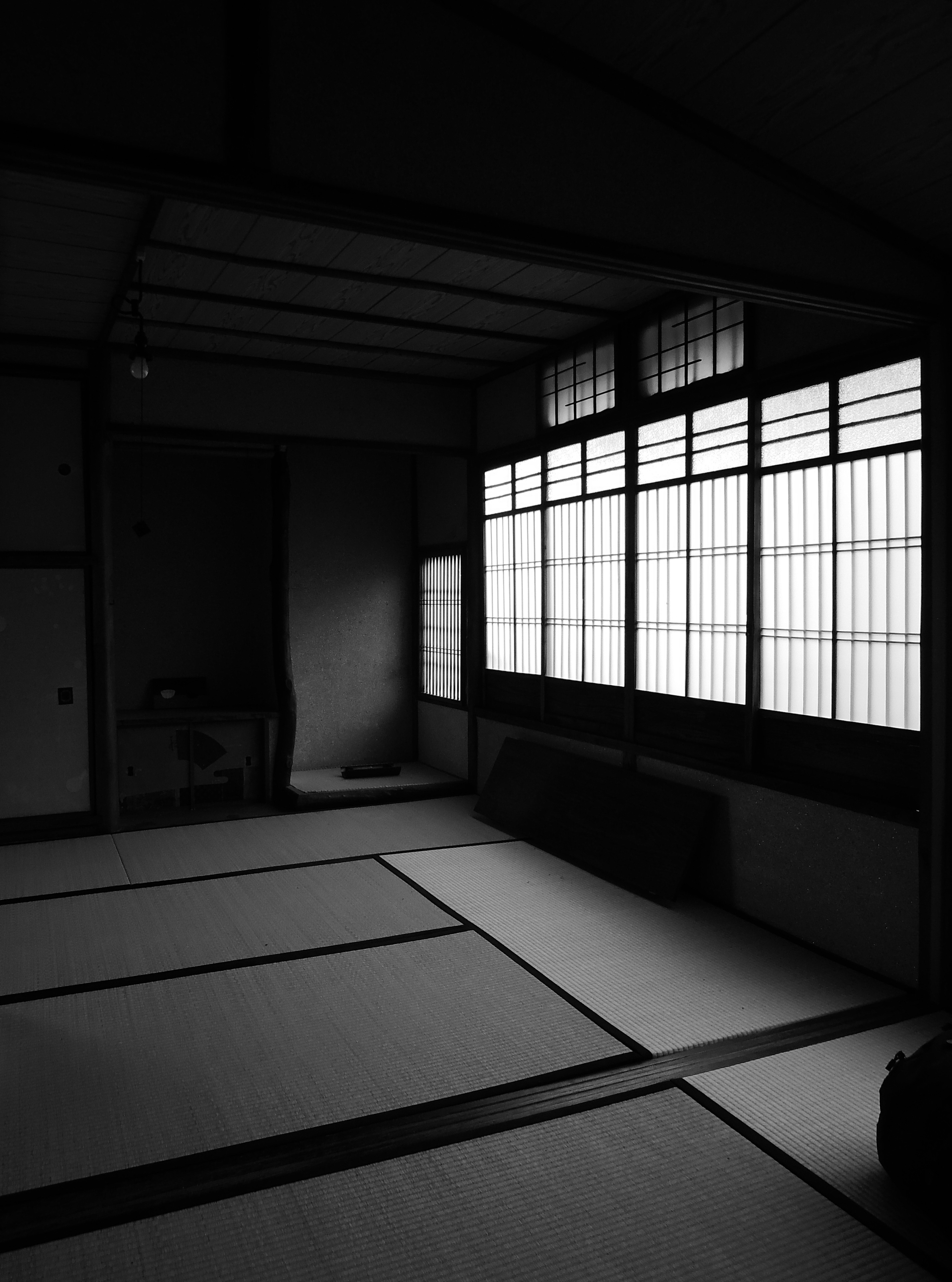
By the stairs there was a round window latticed with bamboo laced with vines,


and on the opposite wall, storage cupboards and an alcove (for ornaments, I think).

In traditional style, there were no bedsteads, only futons which were spread on the floor.
They were perfectly comfortable, as were the wool blankets and down comforters!
They were all stored in cupboards along the back wall.
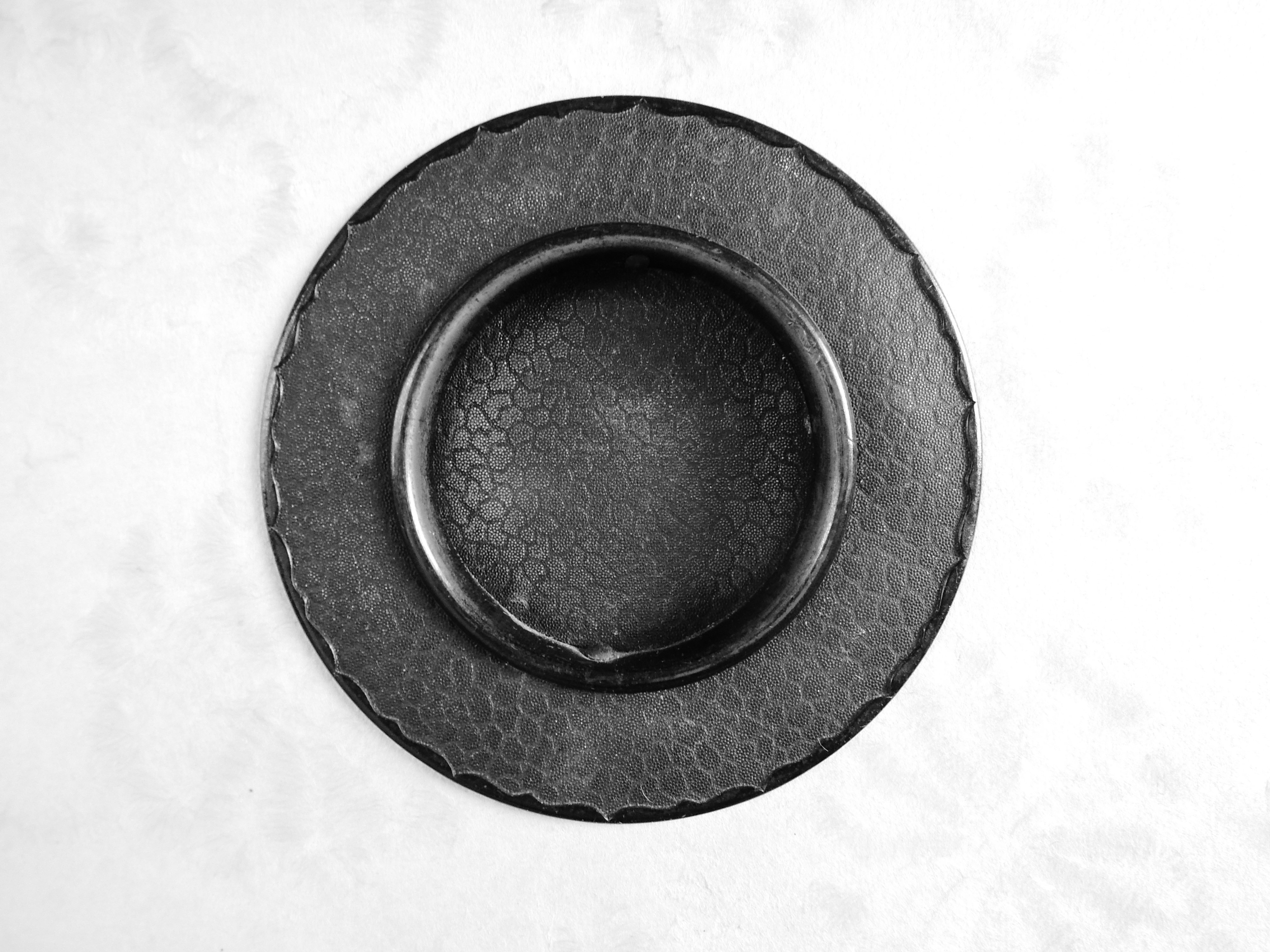
I never noticed until I took this photo that there was a crane in this cupboard door-handle.

The door handles were all pleasing to look at, as were the doors (fusuma) themselves.

The ceiling beams were both straight beams and organic branches.

And this was our view out the front windows.

That morning (the 31st), we took a taxi to Kyoto Station, where we caught a train bound for the larger of Osaka’s two airports. Strangely enough, it was our first inter-city train ride in Japan. We had meant to make side trips, but we loved Kyoto so much we didn’t want to leave it even for a half-day. When the train pulled out of the station, a pair of young female attendants in turquoise uniforms stood at attention and waved solemnly to the departing passengers: bye-bye.
As we sped through the area around Kyoto, we saw the sakura in full bloom everywhere.

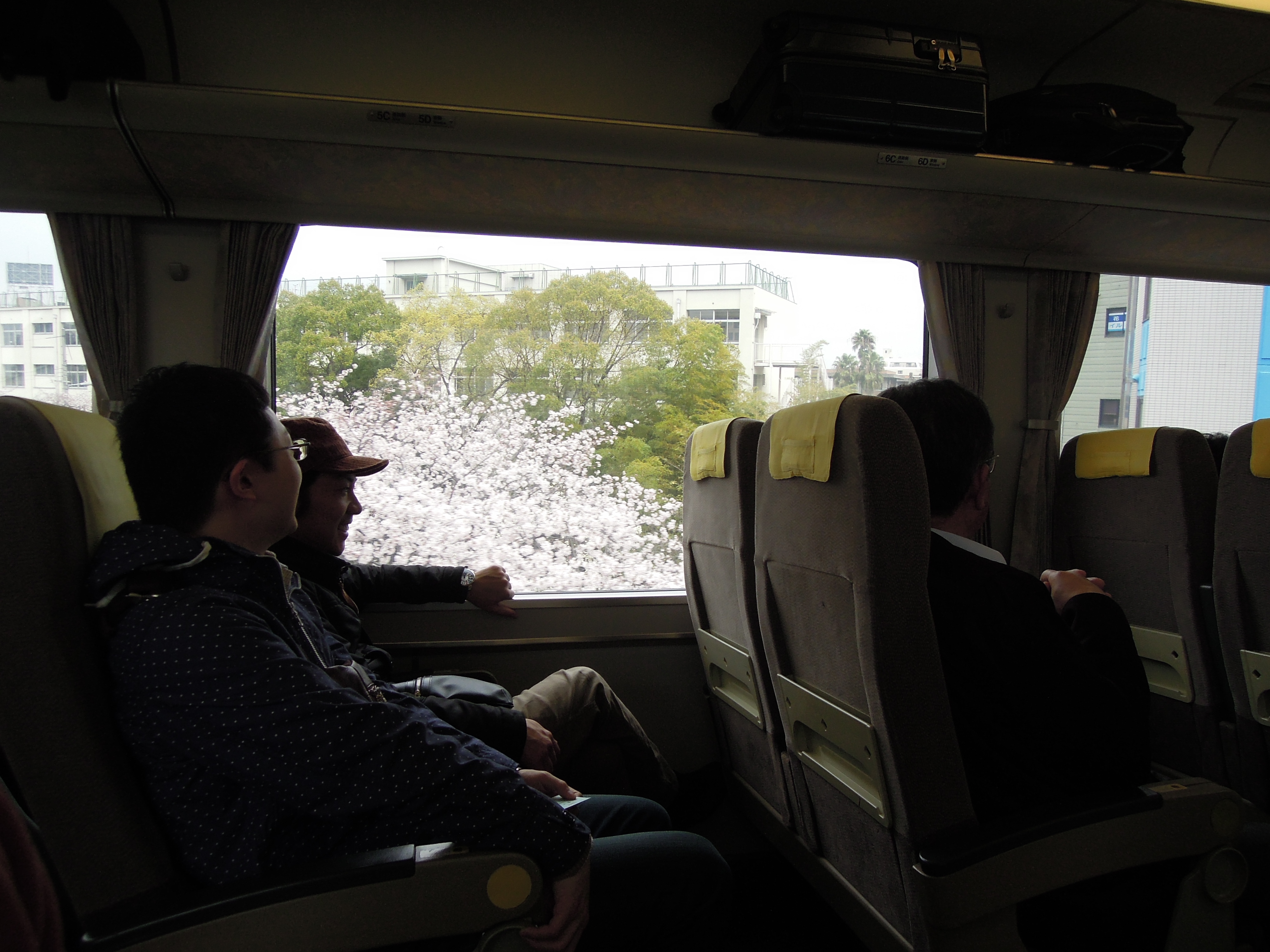
Meiji chocolate factory!

There was a bento shop at the station and I got some sushi for the ride. It was ¥750, about $8 US, and delicious.
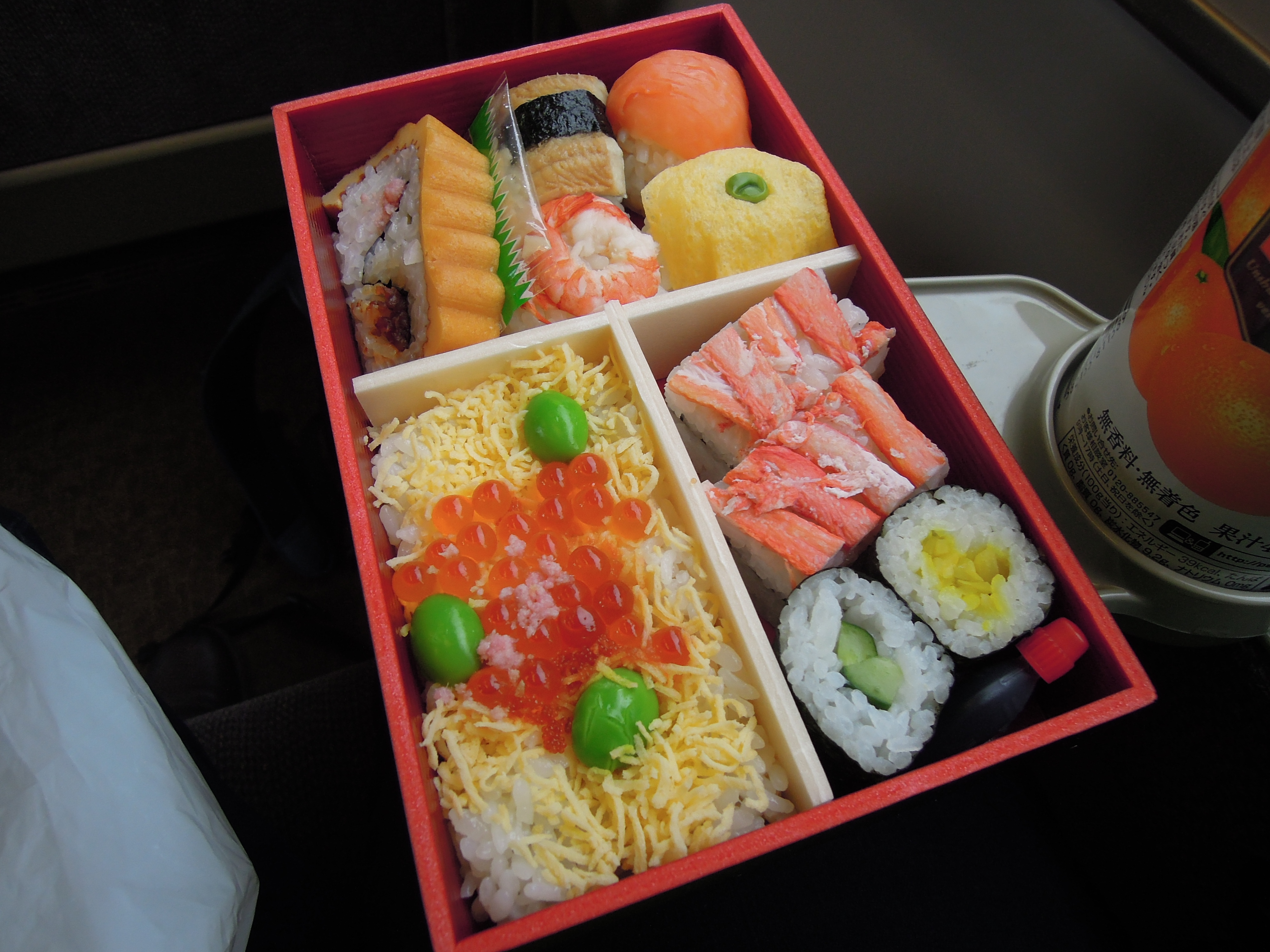
The ride was about 70 minutes and since I’d stayed up late the two nights before, I found myself dropping off.
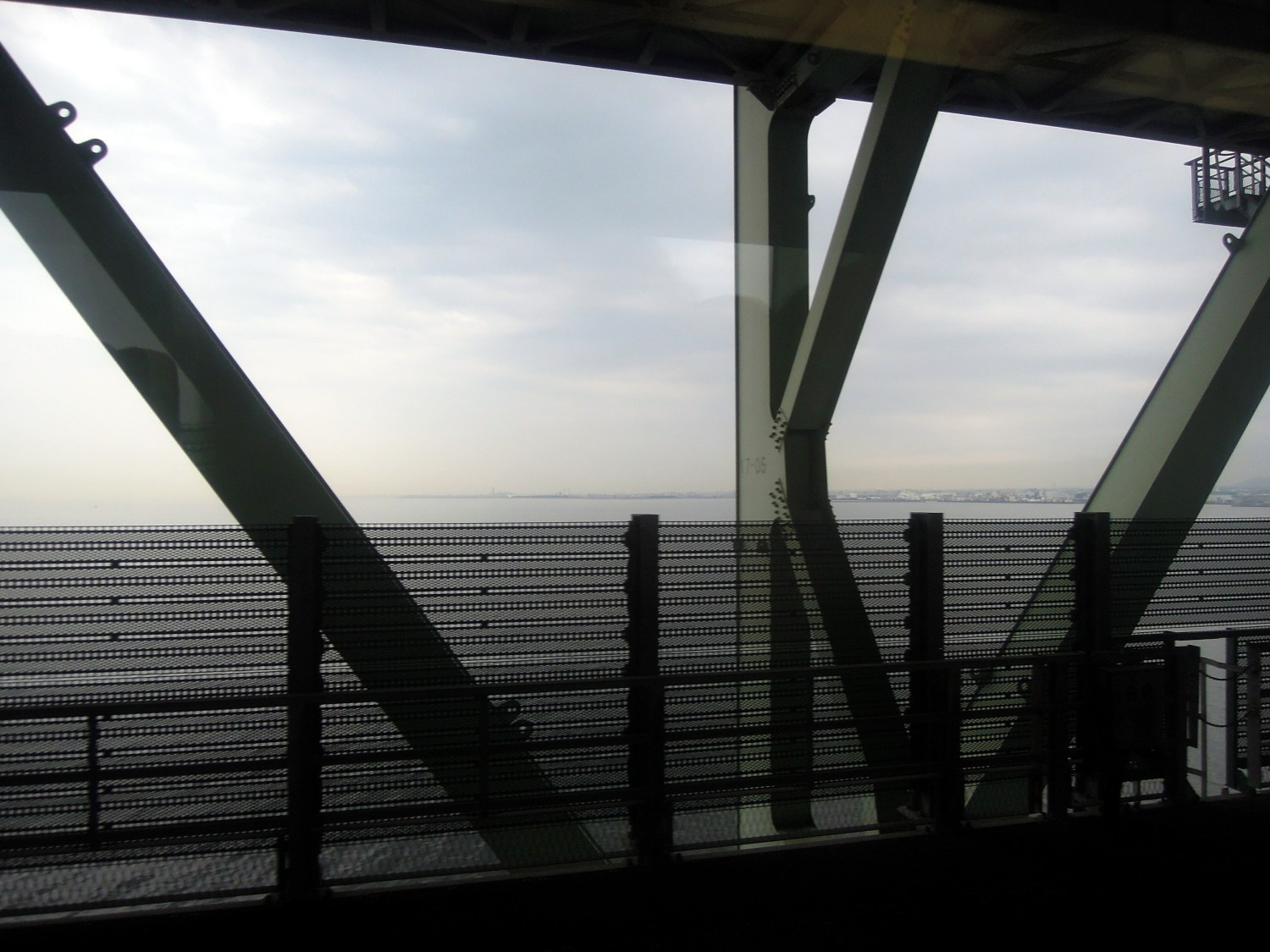
I woke when I heard Erik say, “Look! The ocean!” I was amazed to realize I hadn’t seen it since Hawaii.
I also couldn’t believe how long we were over it; the last ~20 km of the ride to the airport goes right over Osaka Bay.

We got to the airport quite early to be sure not to miss our flight. There was plenty of tasty food available, though, and a boggling number of shops. The line for check-in was extremely long. While we stood in it, we felt already like we had left Japan; after a month of a nearly homogeneous population, we were now surrounded by different faces and languages. Our flight to Singapore went through Manila; there was another flight departing at the same time and going through Taipei. The people around us represented quite a cross-section of Asia, with a significant number of non-Asians thrown in for good measure.
The flight to Manila was almost four hours, but the stopover was so brief I didn’t expect them to let us off the plane. As it turned out, we were required to disembark with our carry-on baggage, even though we would only be on land for maybe half an hour. It felt incredibly surreal to step off the plane and realize we were in the Philippines, a place that was never even on our itinerary (indeed, when I booked the flight to Singapore, I didn’t even realize there was a stopover). We were in a little section of the airport that was just for transiting passengers, with a lounge area and some small shops. I had just enough time to buy a snack (fortunately most vendors accepted Singapore dollars) before the announcement came to re-board.
Chicken and pork siopao, and polvoron.

When we arrived in Singapore it was just after one a.m. on the 1st. After meeting our new host, we went to bed. The next morning we went out to explore. What a different world from Kyoto. The air is warm and suffocatingly heavy with humidity. There are European-style colonial houses, shiny skyscrapers, and tons of greenery. I suspect this will not be a soul place like Kyoto, but it’s still very interesting.


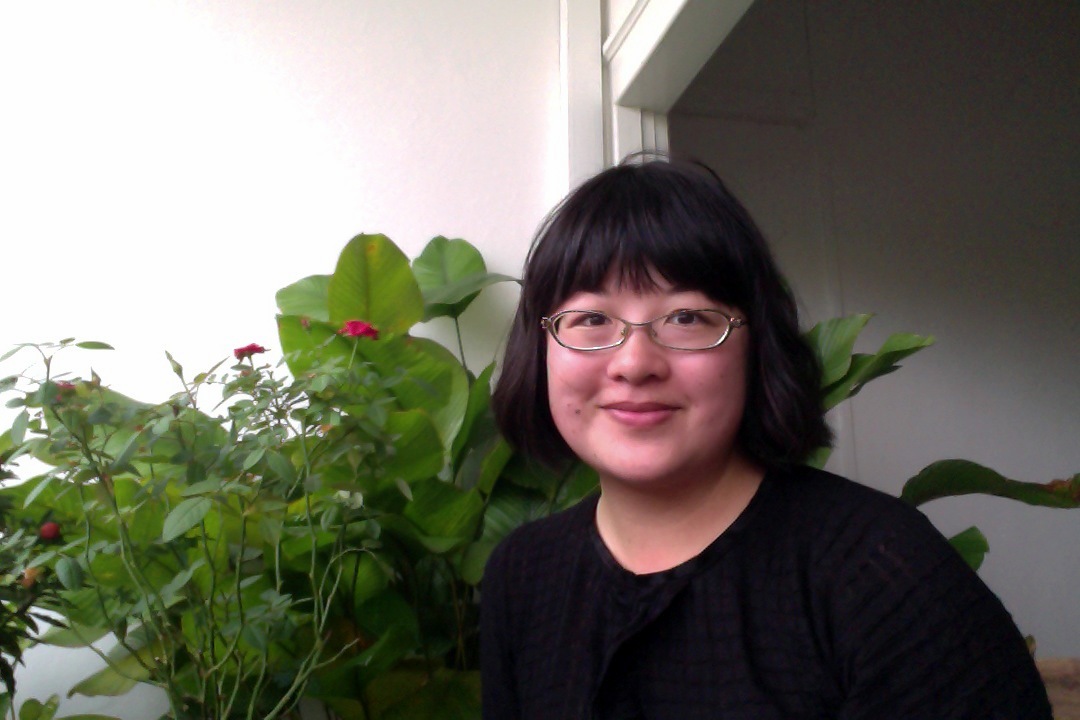
Some say there’s nothing to do in Singapore but shop and eat.

Apartment view at night:
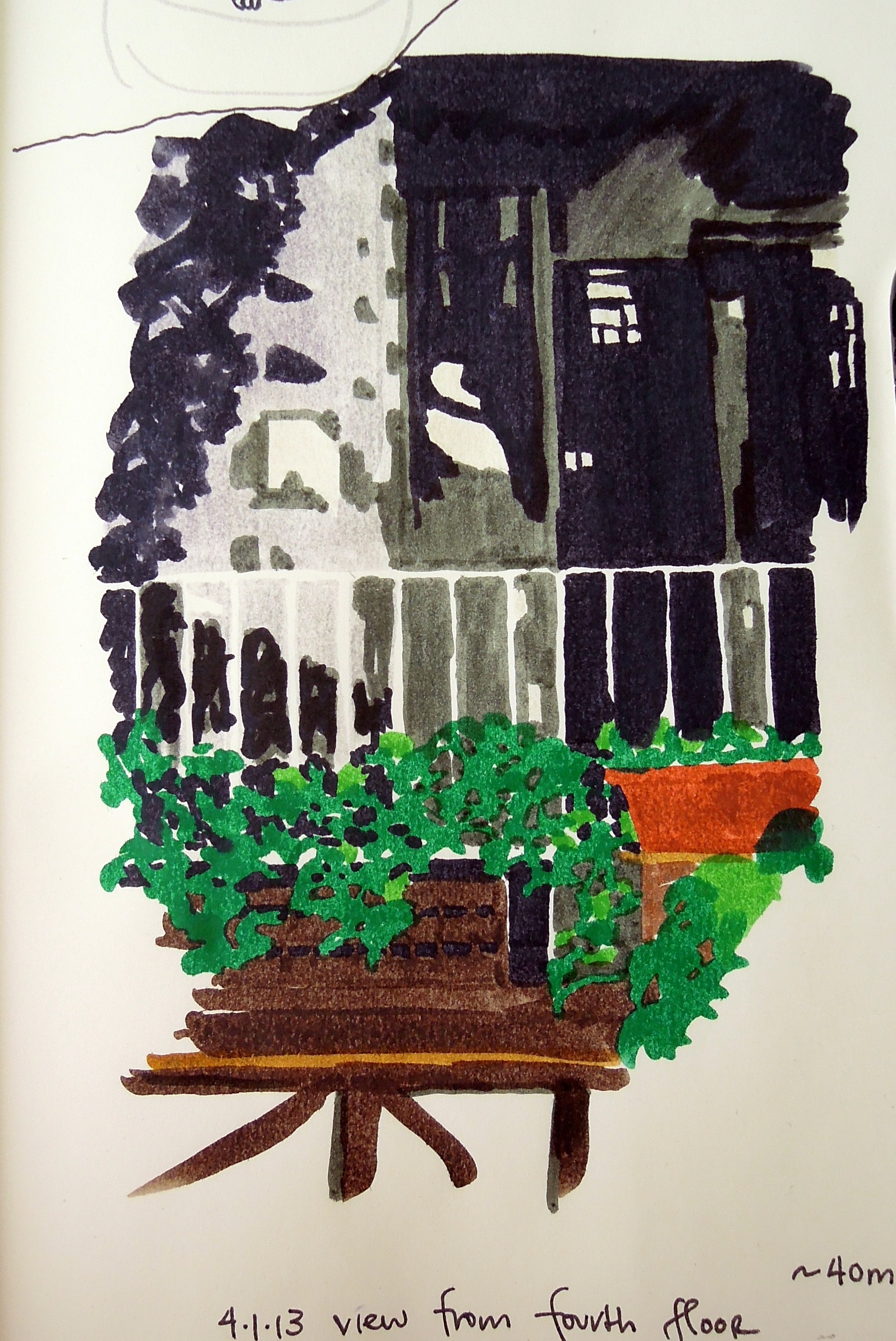
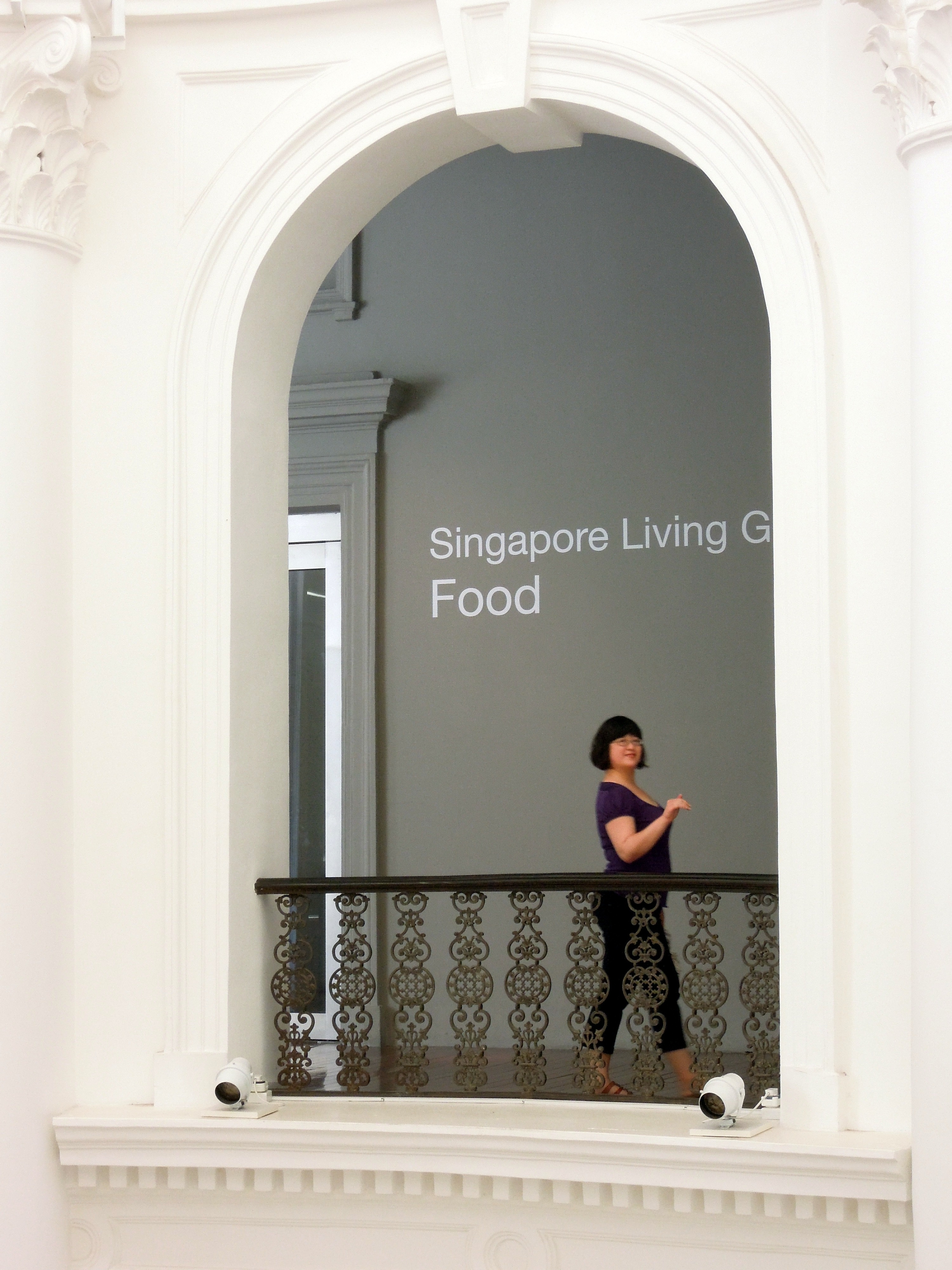
Today we went to the National Museum, which was amazing. That’ll be another post, but I’ll leave you with a few photos from the day.

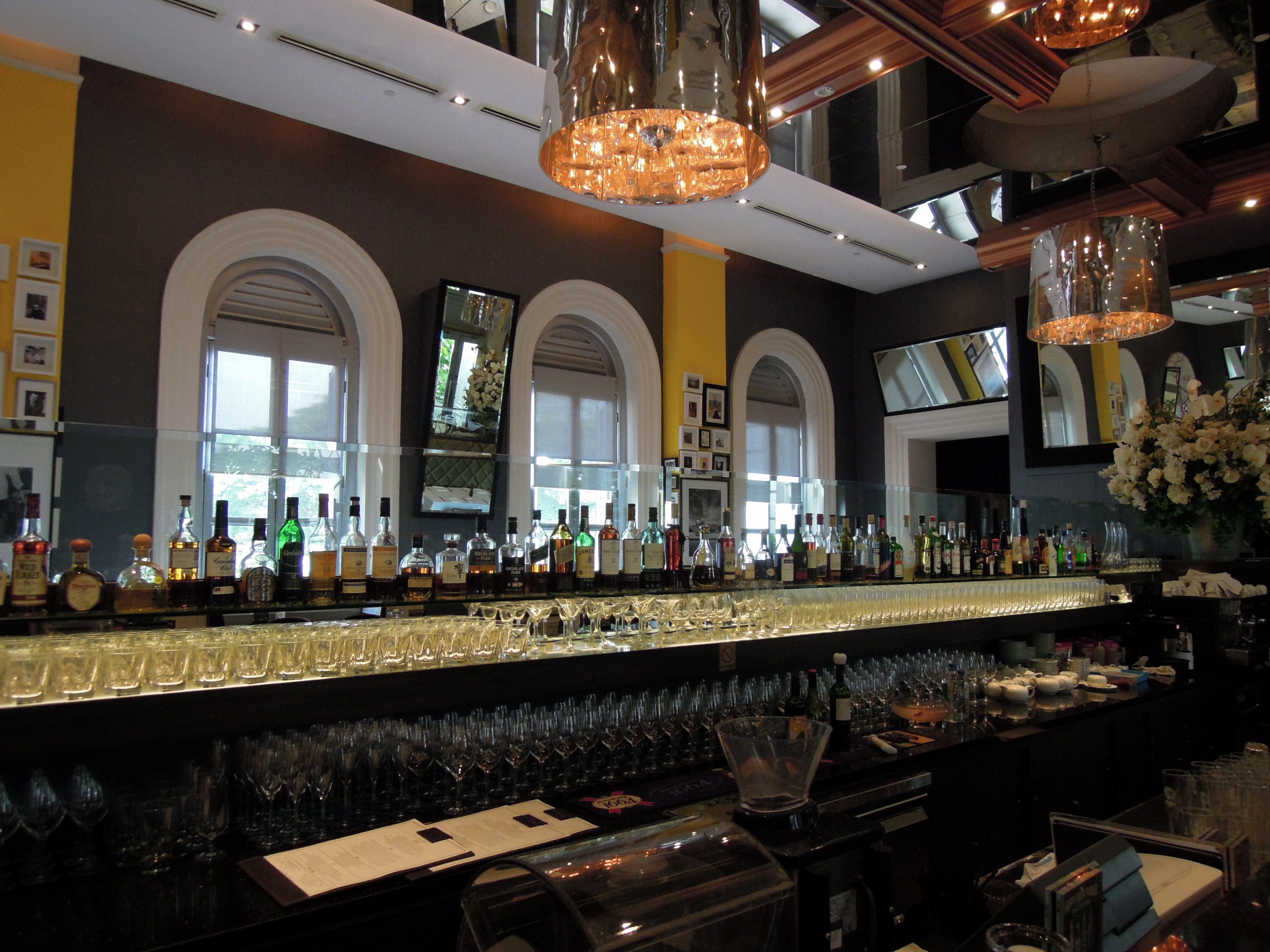
The swank museum bar, Novus:
Each time we change destinations I can’t help but marvel at the quickness and ease of moving into another world. Just think, a few days ago I was wearing wool sweaters and hats, admiring the cherry blossoms, and buying washi paper from store clerks who bowed and said, “Arigatogozaimashita! Okini!” Now I am riding the subway underneath streets full of shopping malls, hearing the unique Singaporean English, and seeing many signs that are also written in Chinese, Malay, or Tamil. It’s almost 2 AM and the apartment’s tiled floors are still warm with the day’s heat. And in another eight days we’ll be in Auckland, where it’s autumn. What a journey this is.
 satsumabug.com | Lisa Hsia
1. in the 2nd picture of your cat sketches that one cat looks so smug!!! 😀
2. this might seem trite, but certain shots of your kyoto house totally remind me of the house in totoro 😛
3. manila! goldilocks shoutout to my family 😉
1. That’s my single favorite sketch from the session. 🙂 The cat really looked like that. It was an adorable expression! (And the kitty had PINK ears… so cute!!!)
2. Oh, I thought of Totoro and Spirited Away soooo many times while I was there. I cannot wait to rewatch them once I get home. 😀
3. I was surprised to find Goldilocks at the airport! I hadn’t realized it was actually from the Philippines. 😀 Mmm, polvoron.
First, how much do I love the idea of cat cafes?! Brilliant. I have cats, but I would still love to visit one of these.
Your farewell to Kyoto is beautiful. Everything you’ve posted about your time there makes me want to go tomorrow. Yes, I’m on the “soul place” band wagon. Kyoto definitely sounds like one of yours.
I love that you’re already painting in Singapore. It won’t be Kyoto, but you’re finding loveliness and light.
There were definitely people there who had cats — I heard them remarking that the cafe’s cats could smell their cats on their clothes. 🙂
Every time I wrote a post about Kyoto I felt as if I were writing a love letter. Paris and Reykjavík were pretty much love at first sight, but it took me a couple of weeks to fall for Kyoto… then I fell hard. 🙂
I’m so glad you describe your posts as love letters because that’s definitely how they felt for me as a reader. I so love that you’ve created this amazing opportunity for yourselves. You inspire me!
Ahhhhh, thank you, Stacie — you inspire me; I never come away from your blog without wanting to write too (and, often, think or observe more critically).
And I’m glad the love letters seemed that way to you too. 🙂
I love the details you bring to my world. I look at the photos of your place in Kyoto and think, ‘where’s all the stuff?’ The furniture, the odd bits of accumulation, the things. I so like the clean openness. Even in such small spaces there is the feel of air simply because of the lack of things. These are place I’ll never see and thank you for bringing them into my world. Can’t tell you how glad I am that you’re traveling!
I’m so glad you’re glad!! It’s partly why I write these posts, to bring other parts of the world to friends at home.
It’s true, there was an airy, open feeling about Kyoto’s indoor spaces, even when they were small. It’s not only the lack of things, but the care taken with what things are there. Things are carefully placed, arranged, folded, etc. It’s one of the first rules of doing a home makeover, actually — you want everything to have a place and purpose, and that makes the house seem bigger because you actually use every corner, rather than having some neglected area you never want to look at because you’re not sure what’s there. 😉 Additional remarks on this in my reply to Sherry’s comment below!
So glad you included pictures of the Kyoto house…..very serene looking. The Kyoto house is what I call an inward facing house. Even though you have a courtyard, your attention is drawn inside. Without the distraction of clutter and even scenery, you are face to face with yourself and the expansion of the soul. Such a wonderful and creative atmosphere, but do you think you could live that way for long periods of time?
Oh, I love that: inward-facing house. Yes. This one was that — but not in an isolated, shut-everyone-off kind of way. The walls are thin (those doors and windows are just one layer of wood and glass) so we could hear everything outside, and people could hear us if we were loud. So it felt as if we were still part of things, even when we were inside. I liked that very much. Sometimes in foreign countries we’ve felt a little too hidden away when we were in the apartment; not so, here.
That’s a really good question about whether we could live that way for extended periods. It would take some doing, for sure; we couldn’t accumulate stuff, because there’s barely anyplace to store it. In other Japanese homes I was able to peek into, there was sometimes an astounding amount of clutter, and the effect was exaggerated because so much of it was on the floor. So even the Japanese don’t necessarily live the way we did when we were in Kyoto! While we were there, though, and since leaving, I tried to absorb of that intentionality about possessions: placing things carefully, putting them away neatly after use, setting up “zones” for my things. It’s done wonders for my comfort and the pleasure I take in my belongings. I’ve always suspected that a mindful home space would have a big effect on my mood, and now I know it’s true!
Lisa, I’ve seen pictures of modern apartments in Japan….so tiny and so full of stuff (or at least it seems like a lot of stuff). Modern consumerism has run over the Japanese ideal of the beauty of empty space. You are so lucky to have had such an authentic experience. I love that you are trying to carry this lesson forward: a place for everything and everything in its place. ❤
I feel very lucky to have had the experience, too! Though I don’t know about the history of the empty-space aesthetic — would that have been an ideal shared by everyone in all ranks of society? And did it span eras, or is it specific to a particular time frame? It’s sad that I don’t know the answers to these questions since I once took a whole class on Chinese and Japanese homes and gardens. ;b Maybe I’ll have to revisit those course materials once I get home!
Lisa, that is a good question. Obviously I hadn’t thought that through. But the Japanese do celebrate the empty-space aesthetic in their temple gardens. I’ve always assumed the temples and the gardens were old, but maybe they aren’t. I’m going to run this by my Japanese brother-in-law sometime. Maybe he has some insight to share.
It’s true, the temple gardens do align with that aesthetic, and I would say that in general Japanese culture is much, much more comfortable with emptiness than Western cultures, whether that’s empty space or silence. But as to keeping one’s house entirely free of clutter, I don’t know if that would have been possible/desirable for lots of people. Maybe yes, or maybe it was like Martha Stewart’s homes in the present day: a much admired dream but one few people can achieve! 🙂
Sounds like an unforgettable journey indeed! I love the old/ traditional Japanese houses with sliding paper/bamboo doors and enjoy sleeping on the firm tatami. It is rather true, unfortunately, that in Singapore, most people just shop & eat during their free time! I could do with some of the humid heat right now… it’s still bordering on zero degrees Celsius here in Brussels. Brr.
Wish I could send you some of the humidity — it’s probably more useful to you there! 😉 I’m so glad I got to spend a month living in such a place; I’ve always been interested in old Japanese houses, and it’s such a different experience to live in one rather than just tour it. As for Singapore, I don’t mind a national culture of shopping and eating… the food is so good, it makes perfect sense! 😉
I work for a hotel group and I always try to rent private apartments or houses when I’m travelling for leisure. It just feels more authentic and interesting this way + you can prepare meals at home when you want a change from dining in restaurants! I just looked up Singapore’s and Brussels’ weather on Google and seems like there is less than 10% difference in humidity between the two cities 😉 I wish I could have some soup noodles or satay (which you have to try, if not already) right now!
I did have satay once and it was delicious! I’ve never been a big satay fan but the one I had was so much better than any I’d ever tried in the US. I even got a satay stick at a market here in Auckland, just because I missed the Singapore one. ;b (Of course it wasn’t anything as good!)
I agree on renting private apartments or houses. We never did that until this year of travels, but now I am such a fan, I look for such rentals even if we’re only going someplace for a few days. It makes such a huge difference in so many ways.
Aww, you can try and make your own satay when you’re back home, on a barbecue! You’ll be able to find recipes online and I’m guessing that it won’t be too difficult for you to find an Asian grocery shop selling the ingredients (especially the spices) that you’ll need in California.
I’m a big fan of renting apartments and supporting other small businesses like B&Bs and always try to convince my family and friends to try it out! I think it is so much more interesting and fun to stay in a small place than a cookie-cutter / massive hotel. 🙂
That’s a good idea! I’ve probably got several satay recipes sitting about, actually — there’s a big cookbook collection waiting for me when I get home. 🙂
It truly is more interesting to stay in a small place. Even on AirBnB where we’ve been renting, I look for the places that are really someone’s home, not just the ones where someone has furnished a ton of studio apartments and is renting them out purely as a business. Not only do the places have more character when someone usually lives there, but I suspect the hosts are much warmer and more responsive too, having more of a personal investment in the place.
I’ve just a few cookbooks at home. Nowadays, I reply mostly on the WWW for recipes – very helpful to know what other people have to say about certain recipes, especially handy tips!
You have a point – about looking for places that is actually lived in, as long as you don’t mind sharing certain spaces (kitchen, bathroom) : )
Very true about other people’s recipe comments! I should really do the same, but I just love cookbooks. 🙂
Actually most of the places we’ve stayed in have not been shared — usually the host just travels a lot, or stays with a friend or partner while we’re there, or something (honestly, I don’t know where most of them go!). So we have had the fun of living in someone else’s place without having to physically share the space with them. 😉
That’s really nice and convenient!
Beautiful post. Magical photos and venue. I wish I could take my cat to such a cat’s paradise. I love it. Good to see you creating again. Fantastic sketches Lisa!!! much love to you my friend.
Thank you, Aga!! Much love to you too. 🙂 I think those cats are very well spoiled. 😉
I’m very amused by the cat café…I admit that the term “kitty bar” sprang to mind. Glad you went there, in any case. Your cat sketches are charming.
And I’m oh-so-glad you gave us the tour of the Kyoto house. I imagine that you will be happy to have photos of all those details in the years to come. (By the way, I just watched Spirited Away with the kids a couple of nights ago, and hope to watch Totoro tonight!)
As ever, I really want to go back to Kyoto. It was a place that really resonated with me, too. And I was only there for a few days! How I’d love to sink into the place for a month as you did. Some day, maybe…
Thank you, Alejna! I have to confess I’m rather in love with my cat sketches too. I’ve never done so many at once from live models. 🙂
I was reading a manga the other day and some of the characters travel to Kyoto from Tokyo, with the woman sighing romantically that they are now in a glorious ancient city. So I guess Kyoto has that reputation for magic, even within Japan. 🙂