
During our earlier travels I posted on the blog almost every day, but you may have noticed recently I’ve posted only sporadically. Late last year I recognized that daily posts caused me to think of the blog as my job, which meant I devoted myself to it at the expense of other creative projects. I told myself that in 2013 I would scale back.
But there’s a second reason for my changed posting schedule: I just haven’t felt as compelled to share stories about Hawaii. I think, since it’s still the US, I haven’t had my “travel eyes” on as much. I remarked to Erik the other day that traveling is exhilarating and exhausting for the same reasons: it creates a heightened state of awareness, a sensitivity to every little detail as if it were completely fresh and new (which often it is). It is really hard to keep that up. And so, without my having made a conscious choice, I think my brain just decided it wasn’t going to observe Hawaii as closely as it had Istanbul or Paris: “Nope, you don’t need me here. I’m going to take a well-deserved rest. Call me when you get to Kyoto.”
However, I think I owe it to this fascinating island to share at least something more about it. The Big Island is often overlooked, even though it bears the name of the state and is larger than all the other islands combined. Even my (Oahu-based) friends know very little about it. It has a wet, green, rural east coast that is mostly inhabited by locals, and a dry, sunny, resort-dotted west coast that is where most tourists base their explorations. (We are halfway between the two, in mountainy Waimea, though our weather tends to the east-coast type.) It feels completely different from Maui, where my family went on vacation in 2002, and when Angela came to visit she said it’s really distinct from Honolulu as well (Honolulu is on Oahu). The island is about uncrowded as you can get: at about 187,000 residents, its population is about half that of the city of Honolulu, and about 150% that of Reykjavík, the coziest city we visited last year.
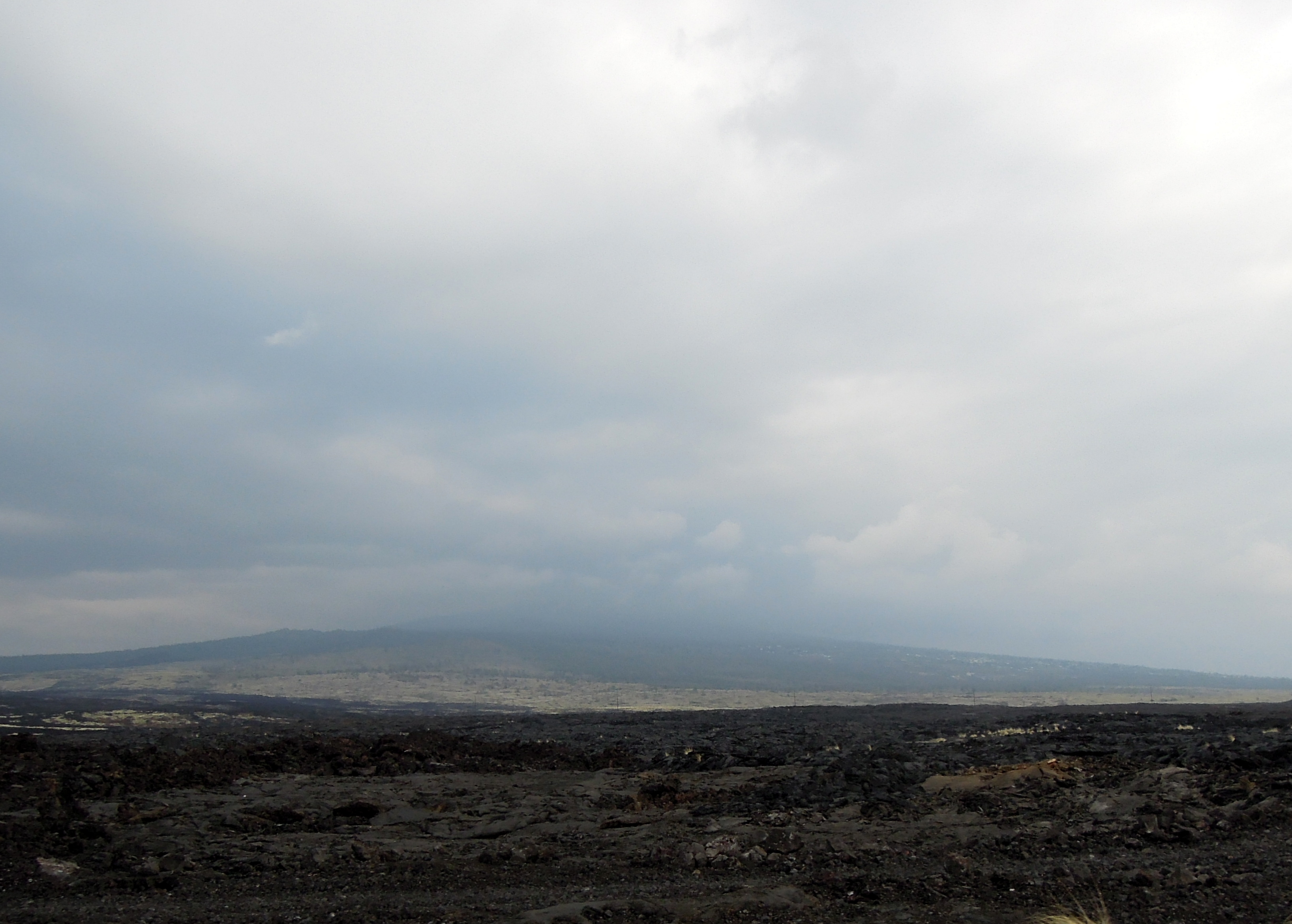
It may seem strange that I mention Reykjavík, but actually Iceland has come to mind countless times since we arrived here. There are many unexpected similarities between the islands. They’re both volcanic, sparsely populated but with a vibrant local culture, and subject to dramatic changes in landscape from one area to the next. Near Kona airport, where most travelers touch down, the ground is the lumpy raked black of lava fields.
{click any image to enlarge}
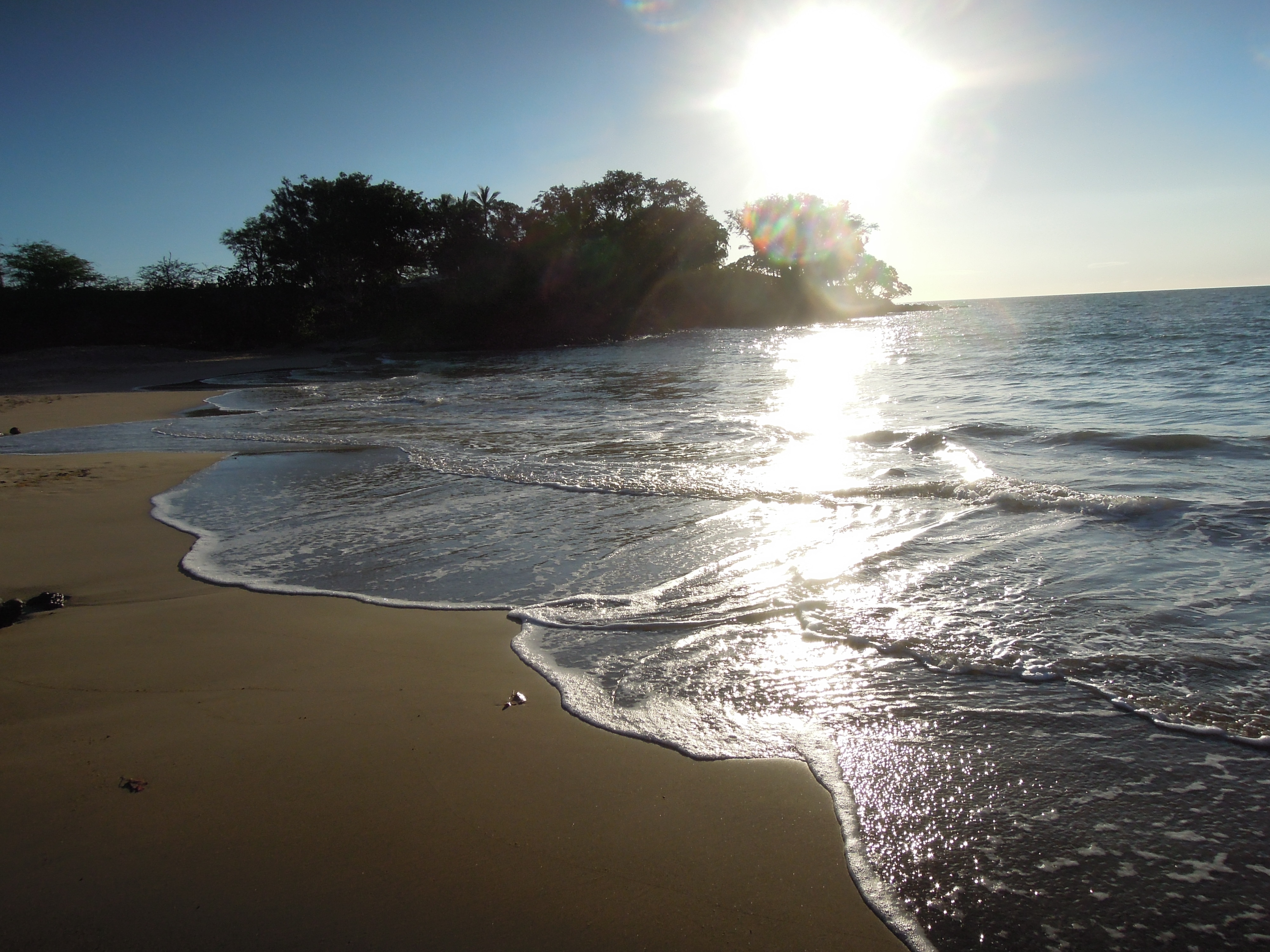
As you drive toward the east side of the island, though, you start to see the little artificial oases that are the island’s fanciest resorts, springing up mushroom-like from the barren lava.

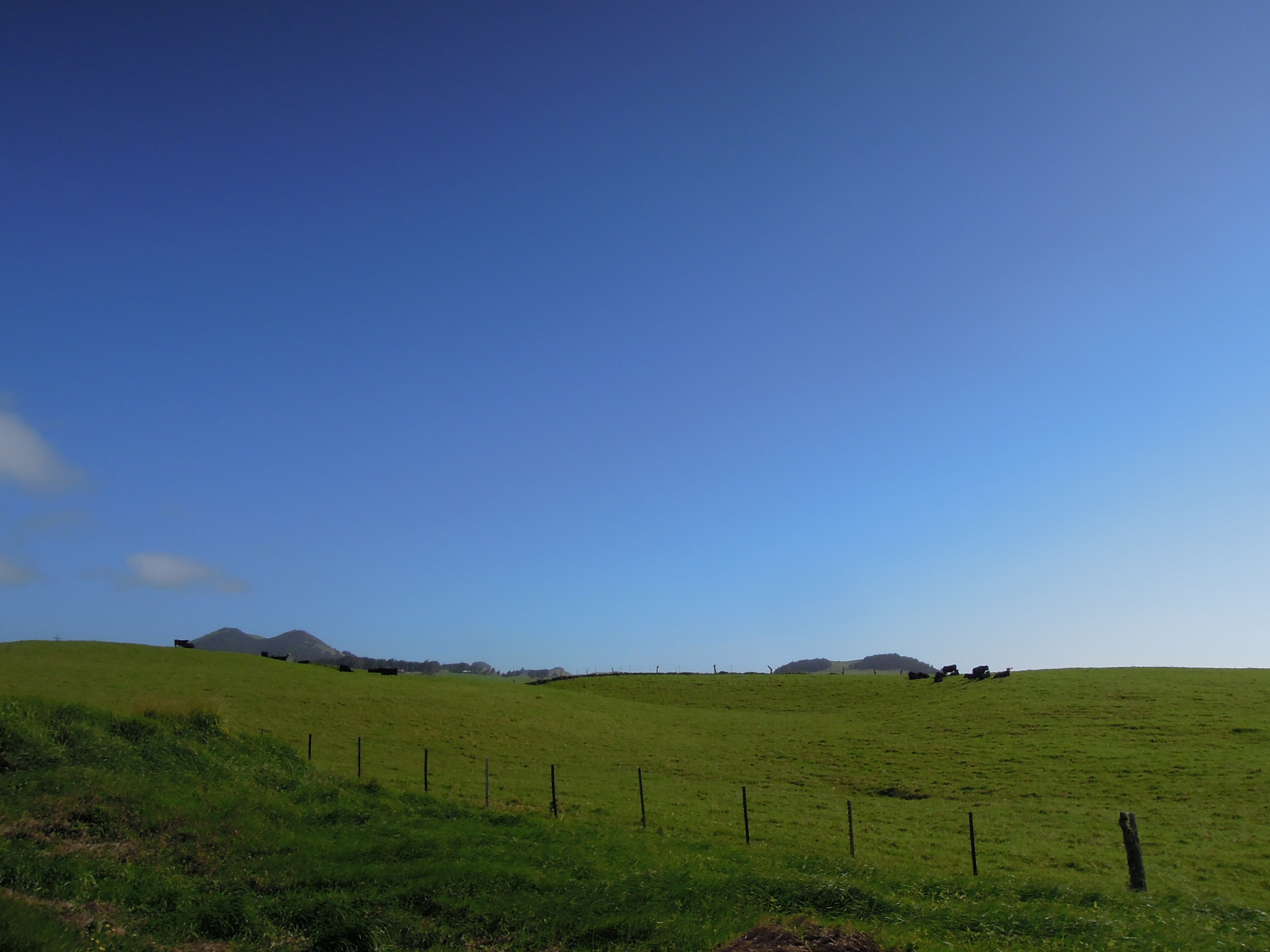
As you continue toward the eastern coast, that unforgivingly dry landscape eases up. About 40 minutes from Kona you can find this on one side:
and on the other side, this:

If you continue past those mountains until you’re just north of Waimea, there’s another road you can take that goes over the mountains to the coastal town of Hawi. This gives you stunning aerial views of the coast:

and ridiculously peaceful pastoral country — atop the mountains — where sheep and cows hang out. All this green is an hour and a half drive from the lava fields.

If you don’t go up to Hawi, though, you can drive through Waimea and then turn back inland. When you’re on the coast you can see people in swimsuits lining up for fish plates at the lunch truck; in Waimea, you’re more likely to see folks in cowboy boots checking out the paniolo (Hawaiian cowboy) heritage center. Inland from Waimea, the scenery is sprawling flatland bounded in the distance by the epic volcanoes that this island is known for. The scrubby grass, seen from the car, reminds us forcibly of Icelandic moss — but having hiked on it once, we know it’s not nearly as soft!
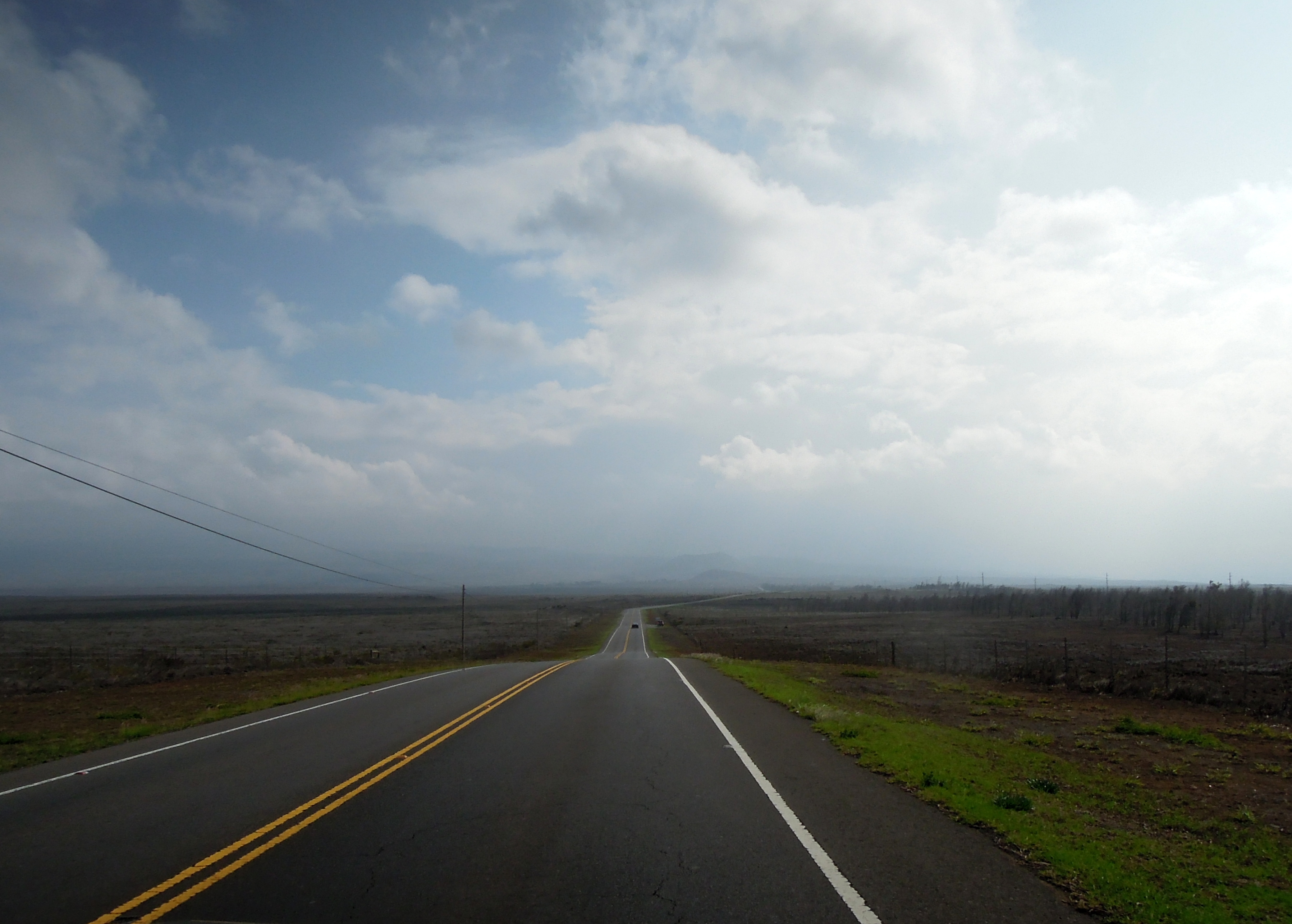
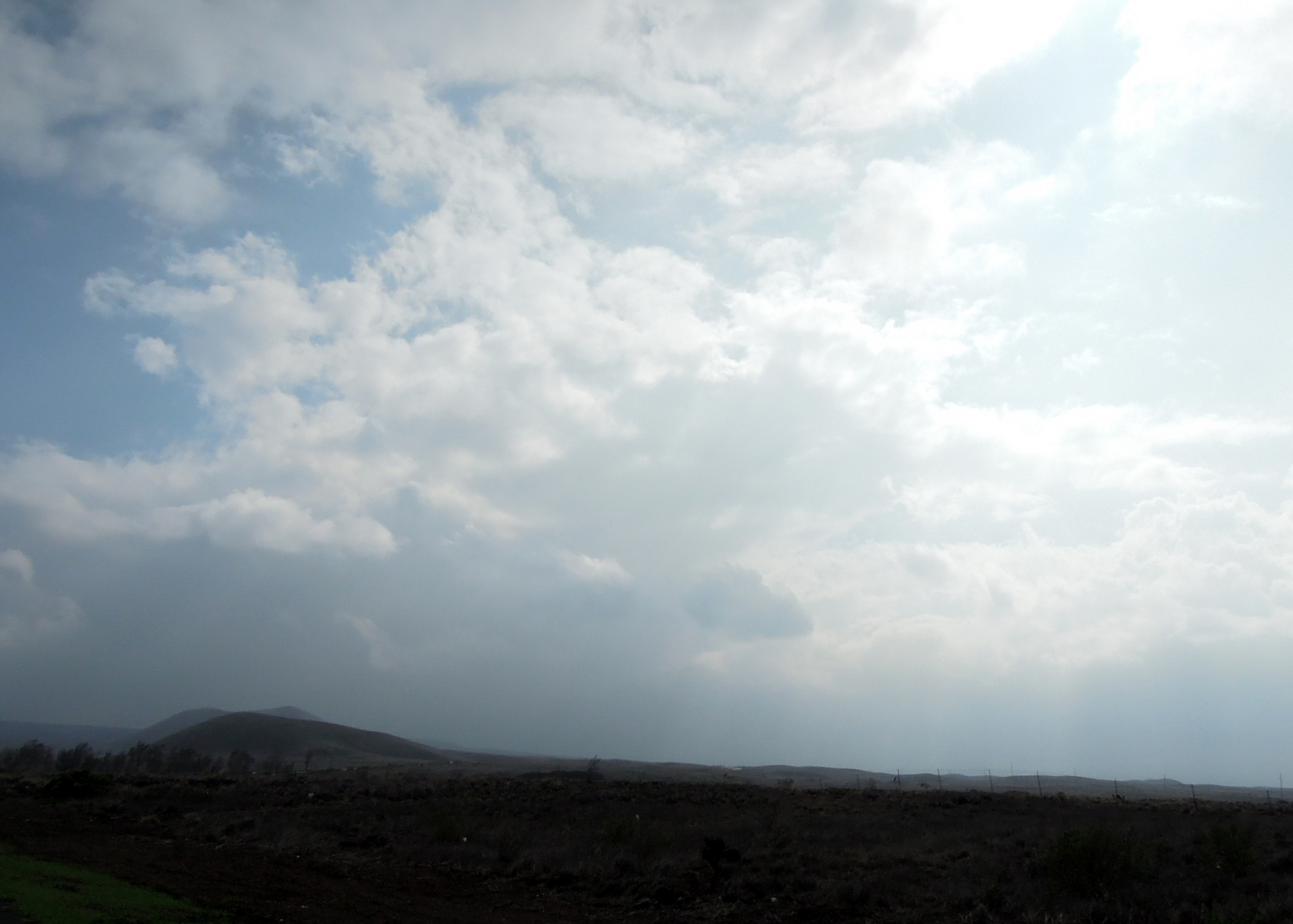

If you turn inland yet again from here, the road becomes a boggling mixture of easy and challenging: smoothly paved, mostly empty, but very narrow and with so many dips and curves it’s like driving in a video game.


This is the Saddle Road, so named because it traverses the low “saddle” lands between Mauna Kea and Mauna Loa. (The coastal highway is known as the Belt Road.) According to one guidebook, the ancient Hawaiians were wary of this valley, knowing it to be the battleground of the opposing goddesses who ruled the two mountains. It is definitely a weird and sometimes eerie place, even with a full tank of gas and well-maintained asphalt under our tires. For many miles there is absolutely nothing along the road except for the occasional ranch, and then later, an Army training area.
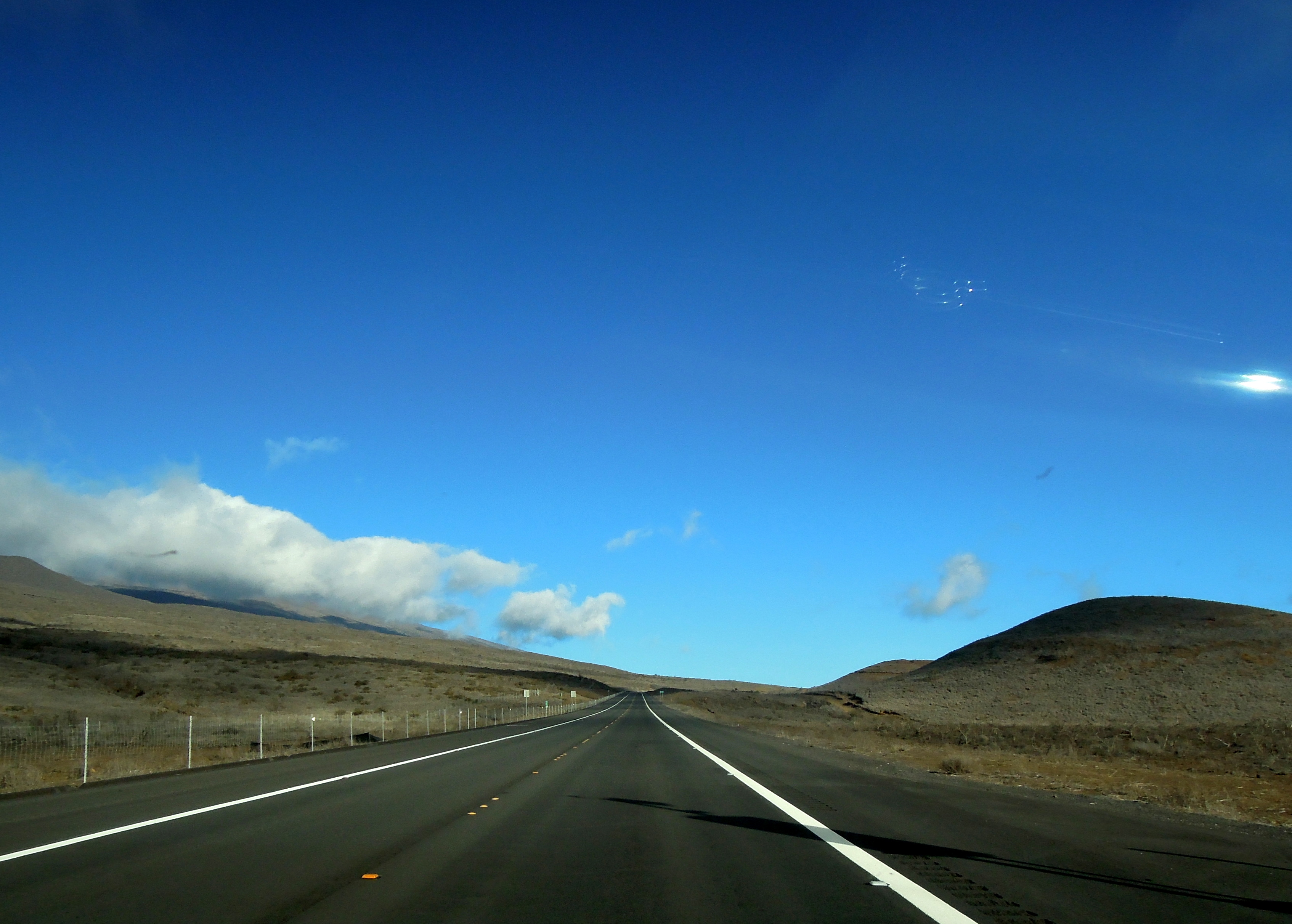
And then, if you make another turn off the Saddle Road, you can ascend Mauna Kea. The volcano is a million years old and twice the height of Everest, though most of it is under the sea. In 6 winding miles you reach an altitude of more than 9,000 feet, and that’s just the Visitor Information Station. From there you can drive (4WD only) or hike up to the summit; the hike is 15 miles round-trip and conditions at the top can be near-arctic (people sometimes ski there).
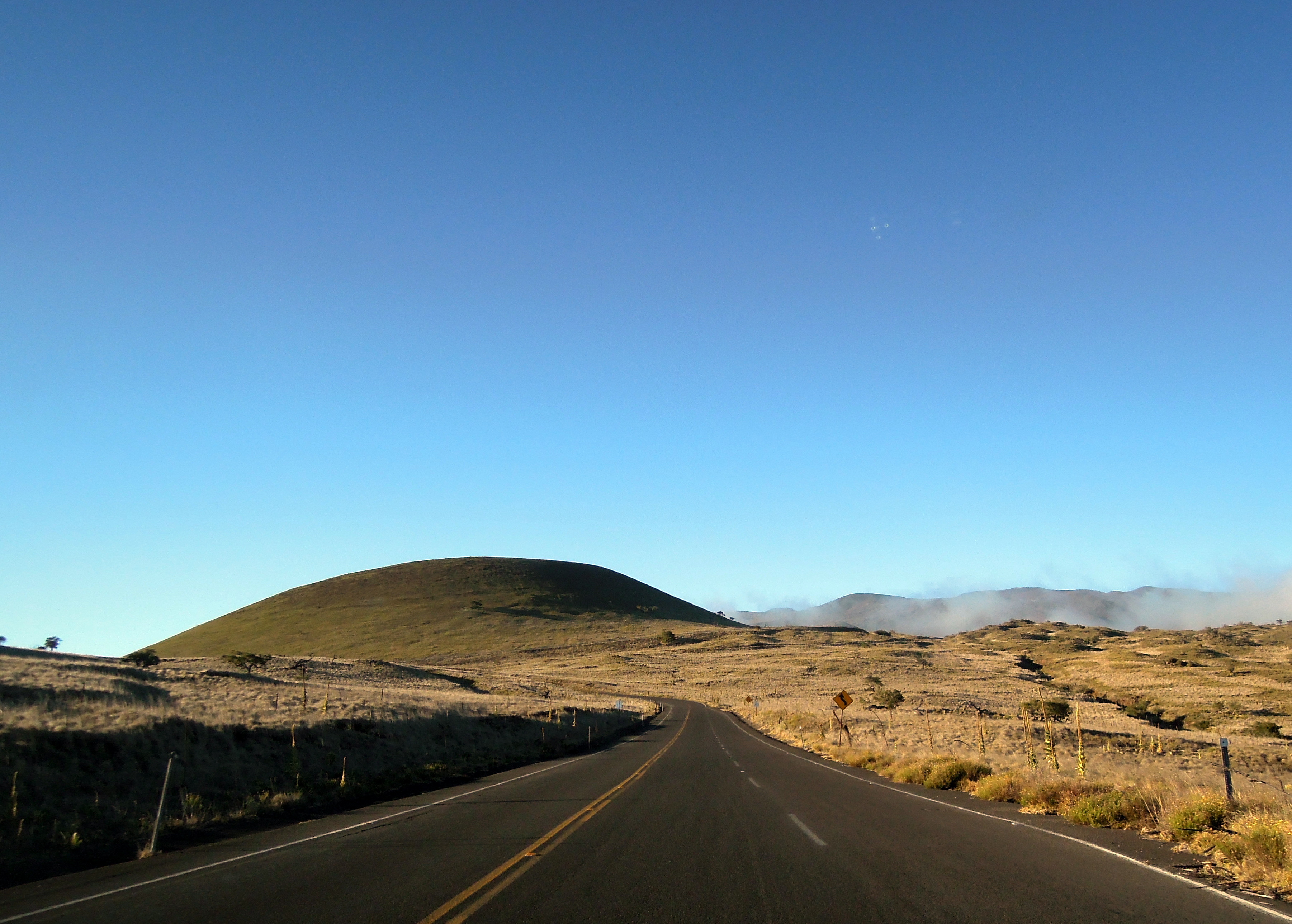


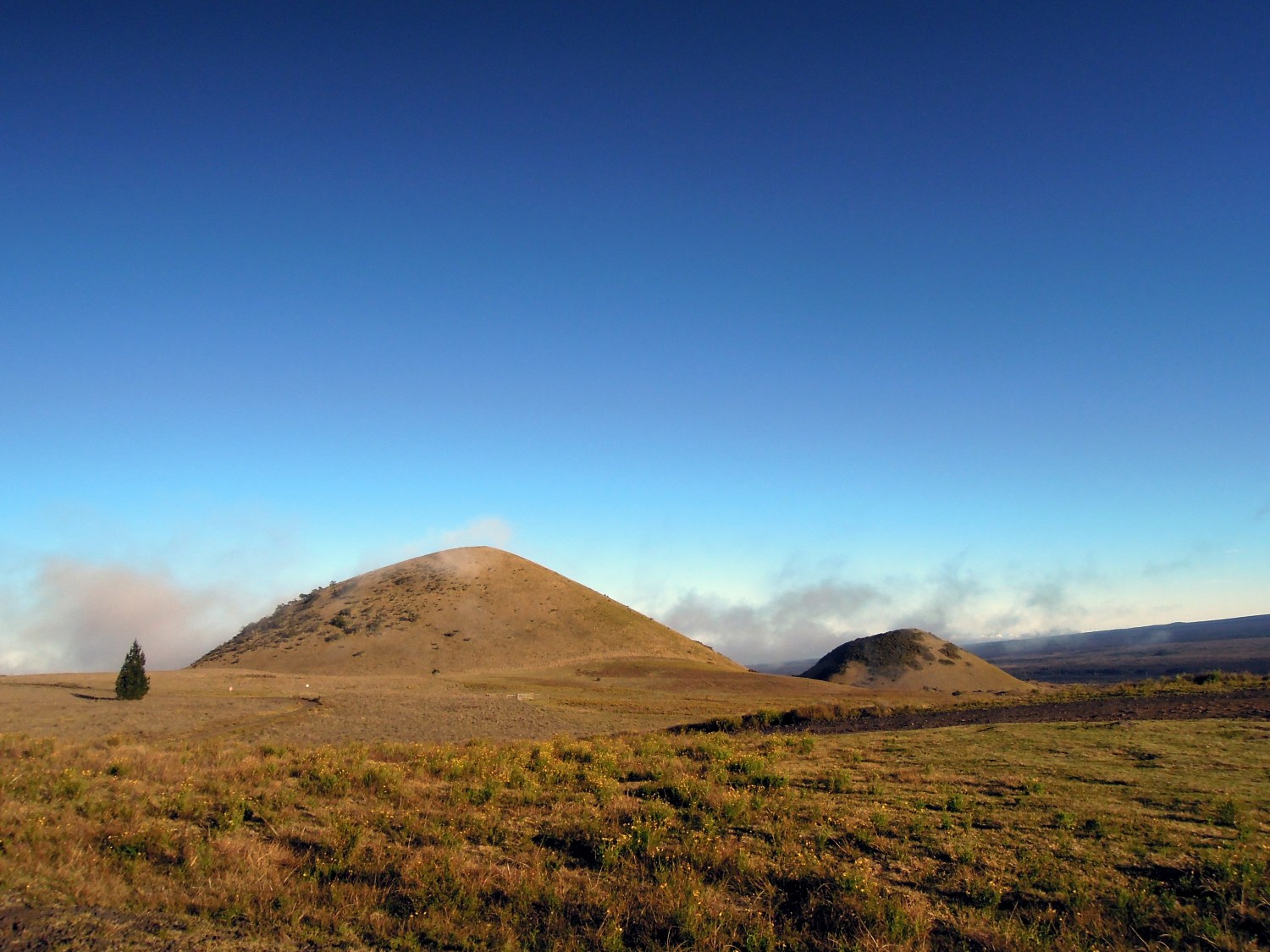
Here’s a picture I made of a cinder cone on the side of the volcano (same one pictured above, in fact):

If you pass Mauna Kea and keep going on the Saddle Road, eventually you get to Hilo, the main town on the east side and the biggest town on the island. From Kona to Hilo, via the Saddle Road or the Belt Road, is just about 2.5 hours.
Here’s Hilo during the Lunar New Year Festival:

Both towns are about midway up the island, north-south; we haven’t even visited the southern part of the island, where there are hot springs and Volcanoes National Park.
Besides the stunning geography, we have also enjoyed taking in some of the local culture. Nearly everyone we’ve met has been shockingly friendly and nice, treating us like neighbors even though it’s clear they can tell we’re from somewhere else. (In one restaurant, we were greeted so effusively that I first thought he thought we were someone else. Very good food there, too.) There’s a spoken accent (statewide, not just Big Island) that’s as distinctive as a Boston or New York accent, and a couple of languages as well (Hawaiian and Pidgin). And we’re only really familiar with the local flavor here in Waimea (which is itself kind of an odd place, with the cowboy heritage and mountain landscape); I can feel a difference between even here and Hilo, so I’m sure I’ll get a totally different experience in Honolulu.
Speaking of Honolulu… we fly there tomorrow, and we’ll spend about six days there before crossing more of the Pacific to Japan!
 satsumabug.com | Lisa Hsia
I came to the same conclusion. My blog was taking over my days and nights! I blog about once a week now. It became my creative outlet. I’m really interested in your blogs from Japan. We want to go there maybe in the fall. Aloha! Carla
Hi Carla! Ooh, hope my Japan posts will inspire you. 🙂
Hope you enjoy the rest of your trip. We’ve been to Hawai’i twice. First trip to Big Hawai’i and Kauai. We went to the top of Mauna Kea with a group in evening for stargazing. Just incredible in the summer –all those stars!! Did you go to the Observatory? It’s a major research facility.
2nd trip we went to Maui. It accidentally coincided with whale season –just fabulous!
Thanks, Jean, and thanks for visiting and commenting! (Sorry I got so backed up on replying!) We didn’t go to the observatory but that’s something I might do another time. We had a really good rest of trip, and now I’ve gone from a “Hawaii, eh, better you than me” attitude to being eager to return someday. (But not in the summer!)
Love this driving, topographical, cultural tour! Will you go to Volcanoes National Park (a place I dream of visiting)?
Thanks so much, Stacie! Glad you enjoyed the ride! 🙂 We didn’t get a chance to go to Volcanoes — it was a 4- or 5-hour drive, round-trip, from our place, and weather was windy, so we decided to just skip it. But that’ll be something to look forward to next time!
I would never have looked at these photos and thought ‘Hawaii’. I’m glad you shared. It’s interesting that you didn’t think you needed your travel eyes. It shows that no matter where we are, how familiar we are with a place, even how much we might take it for granted, it’s a never-before-seen place for someone else. This reminds me to never take my home for granted.
Oh good, Lisa, that’s why I shared! I was really pleasantly surprised too — I spent such a long time thinking I had zero interest in Hawaii, it’s good to be proven wrong. Your home actually sounds like someplace I’d love to visit someday. Whenever you describe it, it sounds almost as exotic to me as some of the foreign places we’ve been!